
Fairy and Dragon Children
Ending. Start at No. 22
French influence
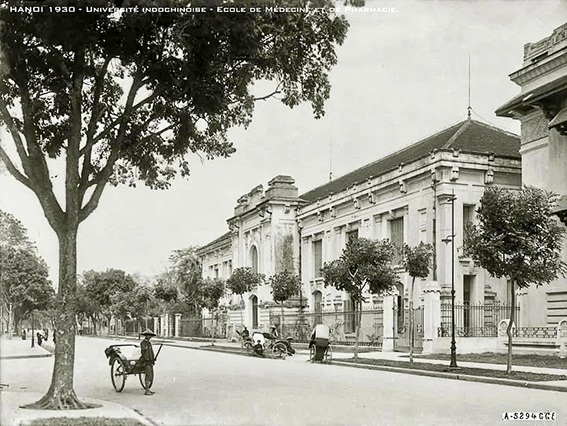
By 1884, France was completing the colonial conquest of Vietnam. The French brought the achievements of Western medicine to Vietnam and established a progressive European‑type education system in it. In 1906, Indochina University was founded that became the predecessor of Vietnam National University.
The French contributed to the appearance in Vietnam of the first printed publications and literature of the modern type. The cultural influence also affected architecture: in Hanoi and Ho Chi Minh City, entire French quarters appeared, consisting of buildings in the European style.
Modern Vietnamese painting was also developed by French teachers. In 1925, the Indochina School of Fine Arts was founded. Its graduates created paintings that unite both Western and Eastern traditions.
Components of French heritage are still visible in Vietnamese culture. Interestingly, coffee that today is one of the national symbols of Vietnam, was imported by French missionaries. The famous Vietnamese sandwich banh mi also owes its appearance to the period of colonialism - the French introduced the Vietnamese to white bread.
However, perhaps the most significant consequence of the period of colonial dependence was that a generation grew up in Vietnam that had learned French values, and therefore was not ready to put up with the rule of the colonialists. This generation included a man who went down in history under the name Ho Chi Minh.
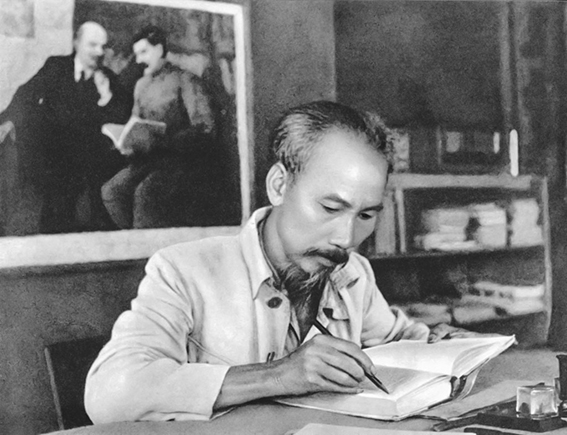
Ho Chi Minh received a Vietnamese-French education. At 21, he went to travel the world, getting a job as a sailor on a French ship, and visited many countries. Living in France, the future leader of Vietnam joined the communist movement. In 1923, he lived for several months in Moscow, where he gave an interview to the then‑unknown Osip Mandelstam. In 1930, Ho Chi Minh founded the Communist Party of Vietnam, and in 1945, on Badin Square in Hanoi, proclaimed the famous Declaration of Independence that became one of the most famous speeches in world history. Curiously, in his speech, Ho Chi Minh directly quoted the declarations of independence of the United States and France.
Victory Day
France did not want to lose the colony and in 1946, unleashed the First Indochina War, in which it was defeated eight years later. The 1954 Geneva Peace Accords divided Vietnam along the 17th parallel into two parts. North Vietnam became communist, and a pro‑American capitalist government was established in South Vietnam.
In 1955, the Second Indochina War begins, also known as the Vietnam War, whose defeat in 1975 comes as a big surprise to the United States. However, knowing the cultural context of Vietnamese civilization, for which the idea of upholding national independence is a key value and centuries‑old tradition, such an outcome would be worth expecting.
On 30 April, 1975, North Vietnam captures Saigon - the capital of South Vietnam. On this date, every year the country celebrates Victory Day - the Day of Liberation of South Vietnam and National Reunification.
A significant role in the victory of North Vietnam in the Second Indochina War was played by the comprehensive assistance of the Soviet Union - Vietnam still remembers it. Gratitude is an important part of the cultural code of this country that is reflected in the famous proverb "Drink water - remember the source."
Market economy with a focus on socialism
In the late 1980s, faced with the most severe economic crisis, the Vietnamese government decided to rebuild the economy on a market track, but unlike the Soviet Union, while maintaining the leading role of the Communist Party. This solution turned out to be optimal, as evidenced by the results of the country's development over the past four decades.
Vietnamese communist ideologists were able, according to their own statement, to creatively rethink the ideas of Marxism-Leninism. In accordance with the new guidelines, the market economy began to be regarded as a means of achieving socialist goals. At the same time, it was stated that such a model of the economy carries a number of dangers and shortcomings that need to be overcome and limited. In the Vietnamese market economy model, strategic industries were under state control. Also, in order to level the shortcomings of the market economy in Vietnam, a social policy began to support the most vulnerable groups of the population. Moreover, if earlier social justice was understood as the distribution of incentives and benefits, now it has become seen as ensuring equal opportunities for all and supporting the most needy.
Today, Vietnam is deeply integrated into the global economy. The country has concluded about 16 free trade agreements. However, globalization carries the risks of spreading alien Western values. The Communist Party of Vietnam is well aware of it and therefore in recent years has been especially active in encouraging and promoting the strengthening of centuries‑old national traditions.
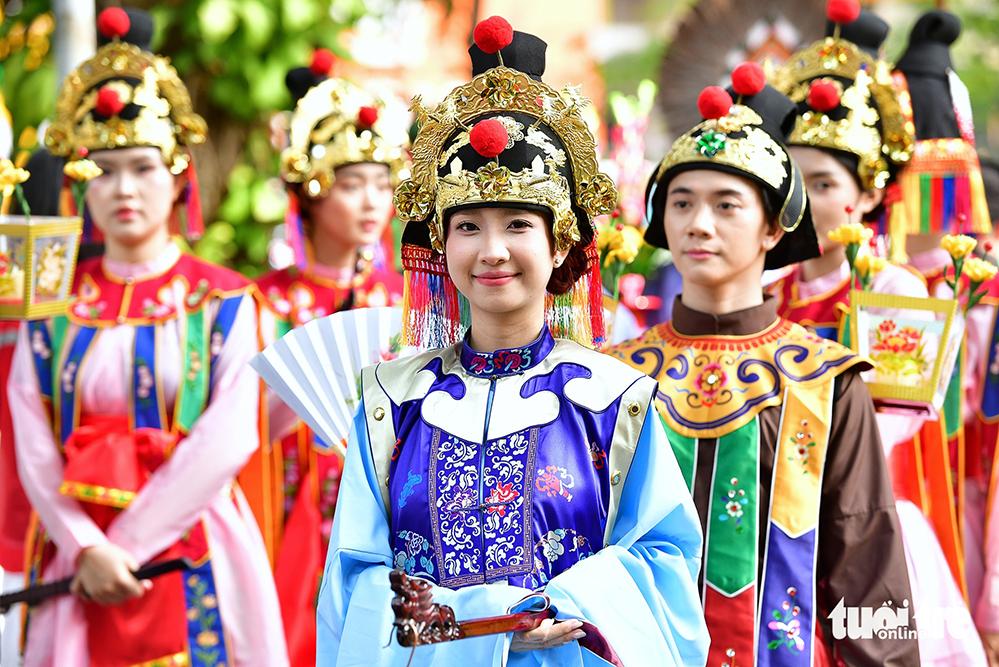
The younger generation takes great pleasure in participating in events that celebrate national culture, such as parades of reconstructed costumes from past eras. Contemporary youth pop artists create patriotic clips.
Modern business culture and etiquette
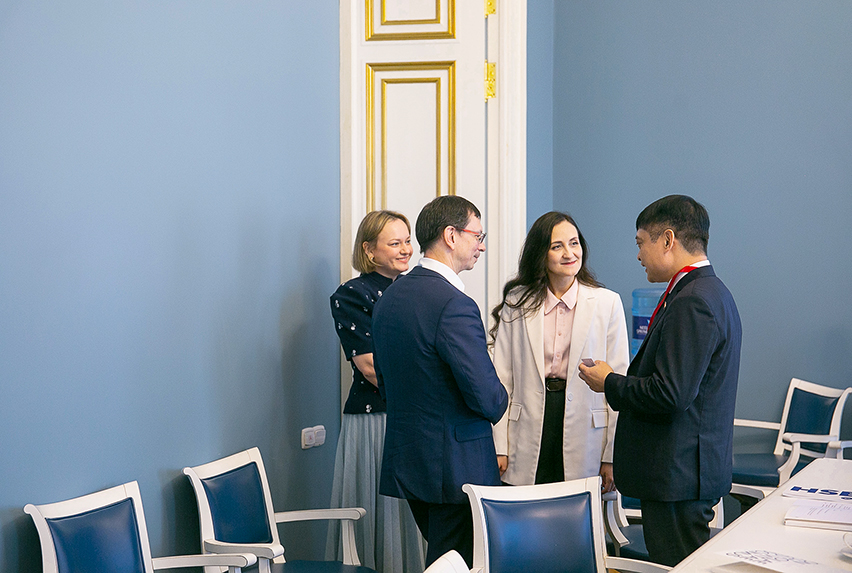
In Vietnam's business environment, hierarchy is strictly enforced. It would be a mistake to send to a meeting, declared as a meeting of heads of structural divisions, a substitute manager of the rank below. It will be seen as disrespectful and dialogue will not take place.
Do not hurt the national pride of the Vietnamese and criticize Vietnam, saying that this country is too hot, dirty and so on.
It is customary to give a business card and gifts with both hands.
It is important to come to the meeting on time, especially if it is the first.
In negotiations, the Vietnamese seek harmony and "face preservation." In no case should you raise your voice and show anger.
It is extremely difficult for Vietnamese to say “no” directly. There are many ways around direct failure. If the Vietnamese say yes and nod their heads, it doesn't mean that they really agree with you, so written agreements are important.
Often, foreign businessmen come to Vietnam with the expectation that they will be able to quickly resolve all issues and conduct a deal. However, in Vietnam, it is not customary to rush to sign a contract - the first meeting serves only for acquaintance. Companies that want to work in Vietnam need to be patient and build long‑term relationships with potential partners.
Informal relationships for Vietnamese are an integral part of doing business. Personal contacts are perceived as a guarantee of trust and a guarantee of protection against risks.
If you are asked about family and age, this shows the disposition towards you from the Vietnamese interlocutor, because family in this country is the most important value, and knowing age is necessary in order to find the right pronoun-address when communicating in Vietnamese.
In the Vietnamese business environment, it is customary to give gifts. You can give souvenirs reflecting the cultural originality of your country, branded stationery, books. Sometimes they give wine, but it is better to consult with Vietnamese colleagues about the appropriateness of this or that gift.
You cannot give flowers in white, because white in Vietnam is the color of mourning. It is also impossible to give a watch, because this item, under the influence of the Chinese language, is associated with death. For the same reason, sets of four things will not work: the word "four" in Vietnamese is consonant with the word "death." You cannot give sharp objects, because for the Vietnamese it will symbolize the destruction of relations.
The gift should have beautiful packaging. You can use red and yellow colors, symbolizing wealth and luck.
A common mistake of foreign delegations in Vietnam is a lack of understanding that it is extremely important for the Vietnamese to eat on time and tasty. There is a cult of food in this country. If you make an appointment for lunch or dinner, then it will be extremely unproductive.
Of course, the Vietnamese do not expect foreigners to fully comply with all norms and rules. But do not roughly violate Vietnamese business etiquette.
Modern education and science
Since September 2025, schooling in Vietnam has become free.
Due to the influence of Confucian heritage, education in this country is a value and is perceived as a path to success. Vietnamese schoolchildren study a lot, much more than Russian ones, and often take first places at scientific olympiads of the highest level: in chemistry, biology, information technologies. Sometimes, it is believed that the Vietnamese education system does not develop creativity, and a historical explanation can be found for this fact - the Confucian tradition to memorize. But today, there are alternatives to public schools in the country - new Western educational institutions.
If we talk about fundamental science, then, unfortunately, Vietnamese universities are not included in the top 100 in world rankings. Many Vietnamese students are educated in Japan, South Korea, America and Australia. Thanks to a programme from the Ministry of Education of the Russian Federation, a thousand Vietnamese students come to our country annually for free education in higher educational institutions.
Article by Maria KARPOVA,
Photos from the archive of Olesya TRUNOVA, from the website vietnam.vn