
School is an experience beyond words
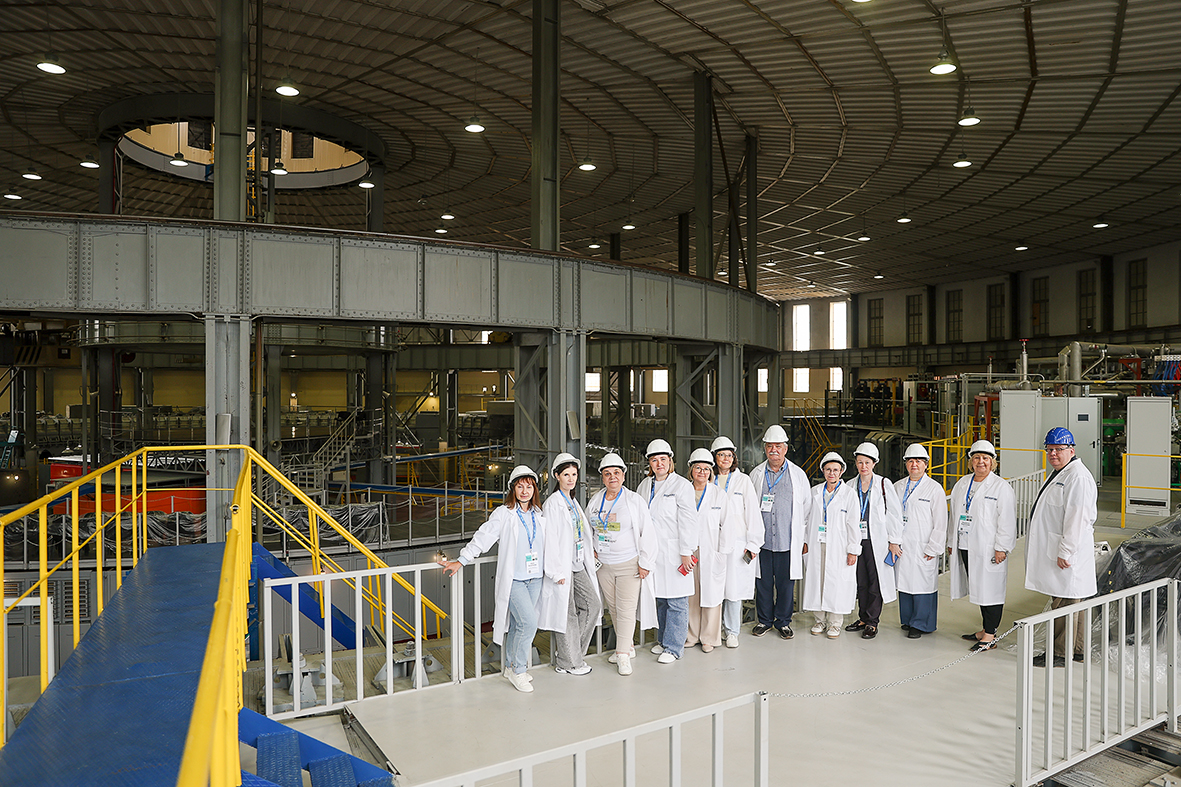
During the School, the teachers learnt about the current research of radiobiologists and attended a video tour at LRB, with fundamental research carried out in FLNR, DLNP and MLIT, examined the IBR‑2 reactor and its instruments, as well as visited the NICA Collider. The UC employees introduced the School participants to the educational and methodological complex "Physics 7‑9. Engineers of the future", the manual "Nuclear Physics. Grades 9‑11", the project "Virtual laboratory", laboratory and project work in physics.
On the last day of the School, a round table was held, at which the participants and organizers exchanged views and some teachers shared their impressions.
Here is what L. E. Alimov (Samara) said for our weekly, "The School has a very bright, rich programme, what is needed for teachers. We were able to achieve the "wow effect" and I hope it will be passed on to the students. From the point of view of methodological material, there are more sources which teachers can form their curricula from. Probably, it should be extended in future, at least, to inform - if someone does not have the opportunity to use new educational and methodological complexes, at least, to know that there are alternatives, new techniques.
I am not quite a school teacher, partly a representative of the JINR Information Centre that will open in Samara, so in any case, we will promote materials about the Joint Institute, we will inform students. We hope that some of them will get to work here through us and thereby, we will contribute to the recruitment of the Institute."
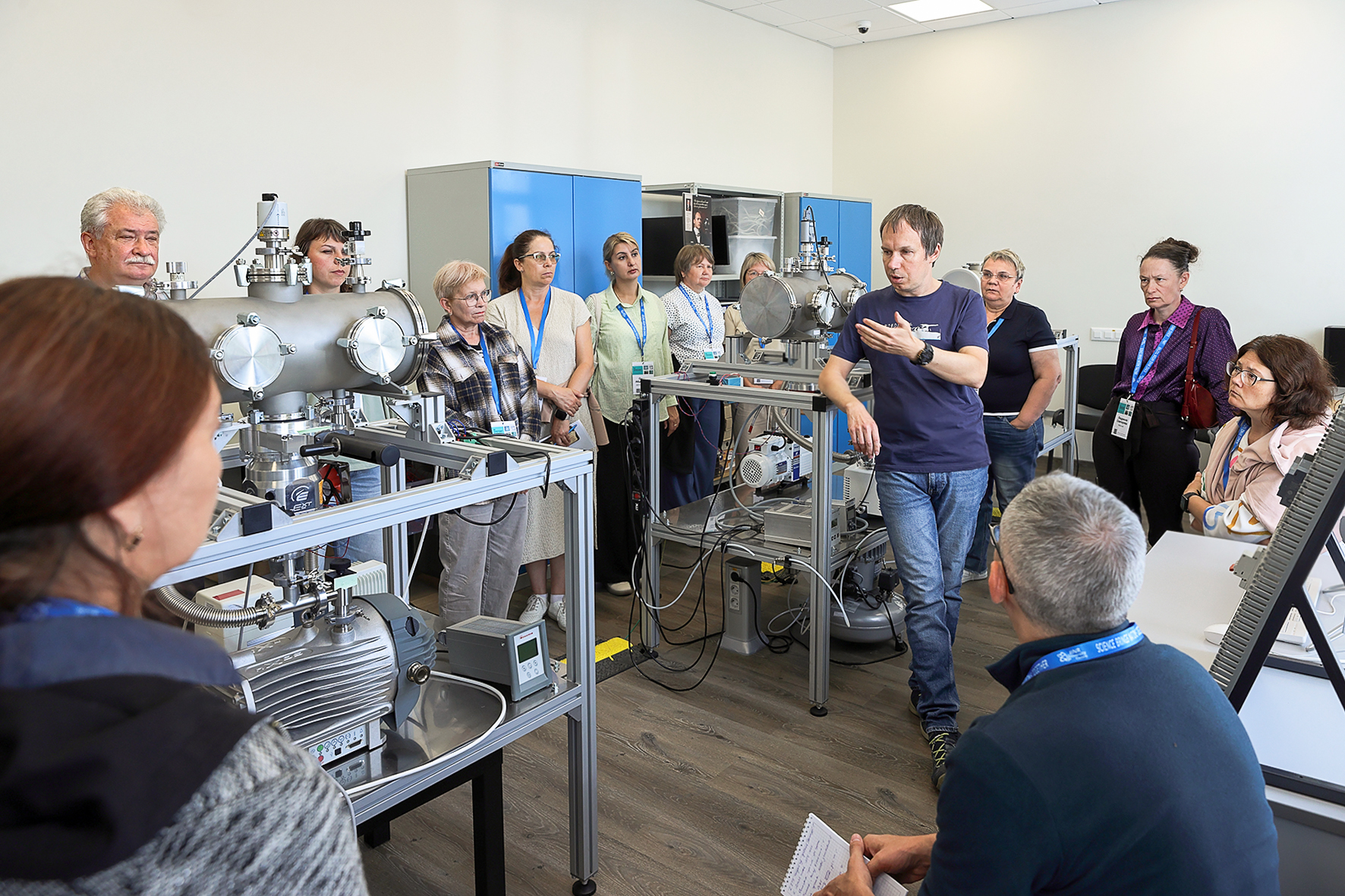
The speech of L. N. Rodionova (Ulyanovsk) reflected the whole programme of the School and the impressions of it, "These five days in Dubna became a real professional reboot for me. I came here with the usual set of school programmes and manuals and I am leaving with a completely different understanding of what it means to be a physics teacher today. Many thanks to the organizers, lecturers and all JINR employees for literally immersing us in the atmosphere of great science, while giving us real tools for everyday work in the classroom. From the first day, the School took height, starting with an acquaintance with the history and modernity of the Institute, an excursion to an engineering workshop, a story about space radiobiology - these are the very lively stories that I will use to motivate my students. Physics here stops being abstract, it becomes a matter that can be touched, seen and comprehended. And the methodological section with the presentation of the EMC "Physics 7‑9. Engineers of the future" is exactly what standard school enrollment so lacks. Now, I have not just textbooks, but a whole laboratory, a support site, a problem book, an exercise book. I am sure that students will appreciate my modern approach with these resources.
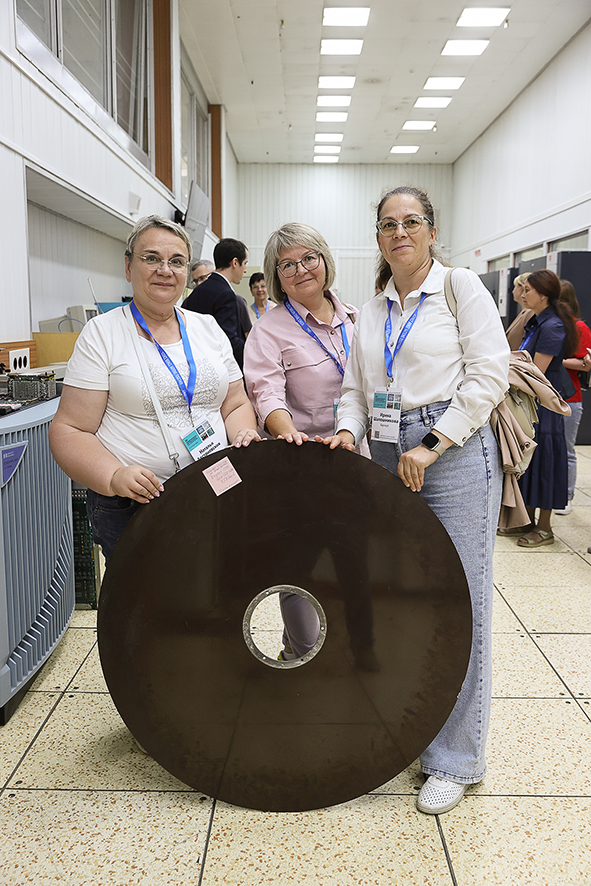
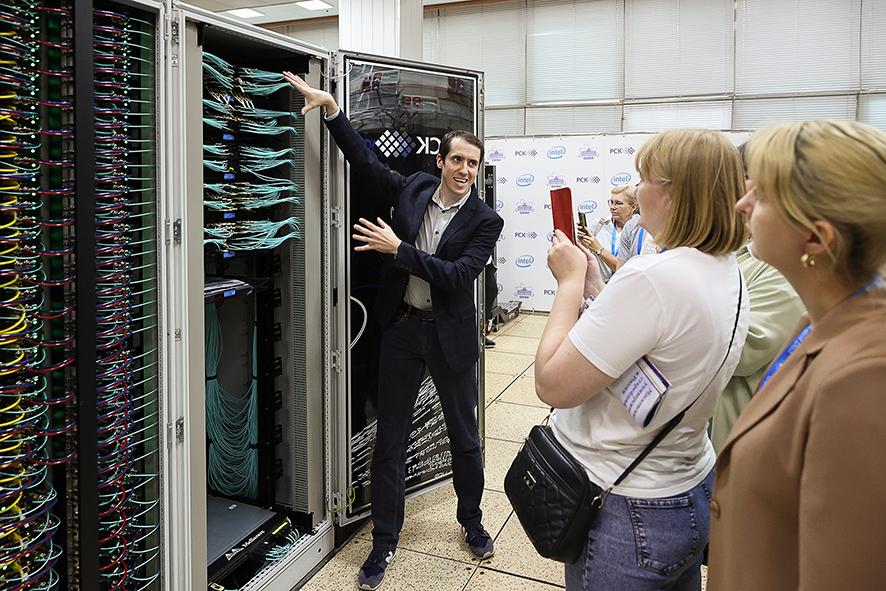
Excursions in the Laboratory were of high importance in my heart. The opportunity to attend the NOvA remote control experiment and to see how photomultipliers are tested in DLNP, to learn about the computing power of MLIT is not just an expansion of horizons, but a living contact with fundamental science. And when we went down to the IBR‑2 reactor, looked at the neutron tomography and radiography instruments, visited the collider tunnel, I lost my breath. To look at these attitudes and to understand that physics is born here, this is an experience that cannot be conveyed in words. Now, to the children's question, "Why do we need physics?" I will not have an abstract answer, but real firsthand stories and photographs. Separately, I want to highlight our lecturers and guides. Each of them not only broadcast facts, but burned with his own business, knew how to explain the most difficult things in simple language and patiently answered our, sometimes naive, questions. It's worth a lot. I leave not just with folders of materials, but with an updated view of my profession, with new contacts and a firm belief that such schools should become traditional. Thanks to the Institute, UC, every lecturer and all the organizers for this week of professional increase. I will definitely recommend this School to my colleagues and I hope that I can come here again."
Her colleagues also shared their impressions, "This time, I'm just delighted with the people who conducted the excursions: young employees with burning eyes talked about science, how they got into it, how comfortable they are here and wish to work at JINR. It costs a lot more than anything else. As long as our children do not see such motivated people, you will not entice them here in any way." "…And it is also important that people from cities such as Voronezh, Tula get to work here and they achieve great results."
"What would you like?" - Director of the UC D. V. Kamanin asked the School participants. "To carry out the experiments ourselves, to connect the schoolchildren for one day in video format so that they learn about the laboratories and to virtually participate in the experiments, or even better - to bring the students with us," the answers were. The teachers quickly switched to discussing their burning problems - a lack of kits for carrying out experiments in the lesson, poor organization of the exam in experimental physics at the MSE, a catastrophic shortage, especially, in small towns, of physics teachers. When asked by D. V. Kamanin, how JINR and other scientific organizations can help with it, L. N. Rodionova replied, "We are always glad to see your employees with lectures for our teachers, or to invite more teachers to schools in Dubna."
Ya. N. Polesskaya (Bryansk) shared her impressions of participation in two Schools, "My first School for physics teachers at CERN expanded my horizons to infinity. It gave inspiration to study with children, for another six months after it, I lectured about what I saw. Both that School and this one allow you to see ultra-modern laboratories, to learn about science and to discuss new techniques with colleagues, to exchange experience. This School is distinguished by a project approach that is not in the School at CERN, introduces the complex "Engineers of the future."
A. E. Terekhov (Novosibirsk) proposed to adopt a memorandum of the 15th International School of physics teachers, in which to outline the position of physics teachers on key issues in the development of school physical education.
"I am impressed that you understand very well the significance of the physical experiment," a leading researcher I. A. Lomachenkov said at the UC. “Previously, we managed to insert into the programme of these schools a demonstration of a number of interesting experiments that impress and make you think. It is necessary to include them in the future so that teachers then show experiments to their students."
D. V. Kamanin spoke about the activities of JINR Information Centres aimed at meeting the problem of maximum availability of information about the Institute. Rector of Dubna University A. S. Denikin introduced the School participants to the educational model of the University, spoke about the training of personnel for JINR and SEZ enterprises and answered numerous questions.
Olga TARANTINA,
Photos by Igor LAPENKO