
Artist. Love. Theatre
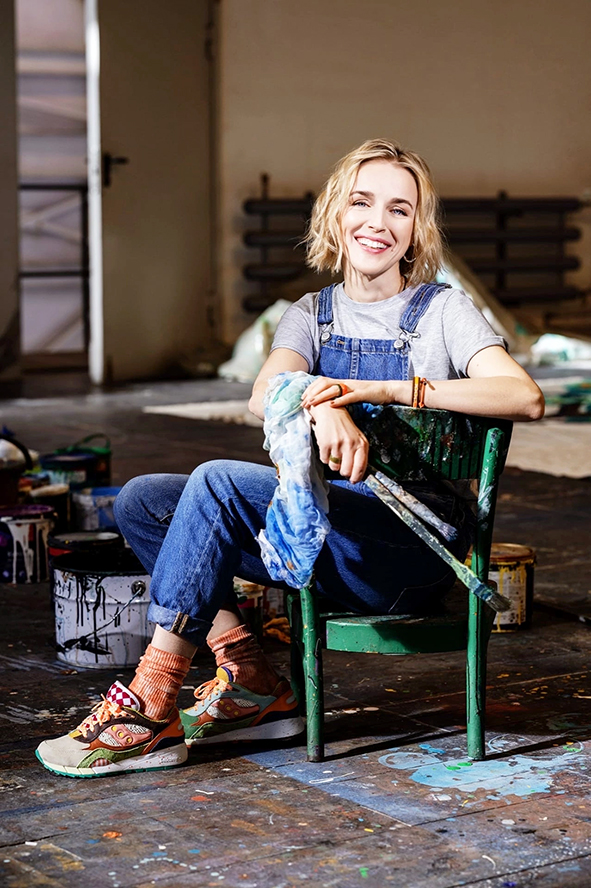
The theater is born long before the first bell, in the artist's workshop. The set designer's hand sets the tone for the performance, creates the very atmosphere that makes the viewer forget that he is in the hall. Maria Utrobina's exhibition is an opportunity to look behind the scenes and to see how the whole world is born from the sketch: how color, line and form become emotions and the sketch on paper becomes the space where the heroes live.
The theater artist is one of the most multifaceted creative professions: he is a painter, an architect, a designer and a co-author of the director. His work lives only in synergy with acting and light, while remaining an independent artistic unit. Maria's exhibition will allow you to consider a piece of the theater world in detail: from the first pencil sketches to the final solutions, from color palettes to the design nodes of the scenery. The audience will open not just a collection of sketches but a chronicle of stage thinking, where each stroke is a decision that affects the perception of the performance.
Maria was born in Dubna. She graduated with honors from the Moscow Art Theater School, Faculty of Scenography, course of Professor O. A. Sheintsis. She works with the largest theaters in Russia and the world: as a production designer and a costume designer, she has created spaces and images for more than 100 performances of various forms and genres, the author of artistic solutions for more than 30 films, the creator of more than 40 exhibition spaces and expositions.
She productively collaborates with the Bolshoi Theater of Russia, the Maly Theater of Russia, the Russian Youth Theater, the Stanislavsky and Nemirovich-Danchenko Musical Theater, The Moscow Theater of the Young Spectator and many other theater venues. Performances by Maria Utrobina have more than once won the Golden Mask Award and many other theater awards. For the production of the Maly Theater of Russia "Dead Souls" (directed by A. Dubrovsky) Maria Utrobina in 2022 was awarded the Prize of the Government of the Russian Federation in the field of culture and art.
Maria is a teacher with 19 years of experience, Head of the Stage Design Department of the Moscow Art Theater School, a master of the course of stage designers. As a Member of the Union of Artists of the Russian Federation, a participant in the Prague Quadriennale in 2007, regularly participates in exhibitions of MOSH, "Results of the Season" and others. Her works are exhibited at the Bakhrushin Theater Museum. She is a winner and scholarship holder of Russian and international prizes and festivals.
In a conversation with Maria Utrobina, we discussed the upcoming exhibition at the Cultural Centre “Mir”, the nuances of the profession of a theater artist, what remains "behind the scenes" of the creative process and of course, talked about personal guidelines and creative principles.
Maria, your exhibition is about theater and love. Maybe it has a "key" exhibit that sets the tone for the entire exposition?
- The exhibition is built on the principle of "importance" of each exhibit and detail, as well as in the theater, theatrical space there are no "passing" elements, every nuance is important and any, even a tiny element, works to create a whole space and performance.
Does the exposition have a cross-cutting topic, or is it more of a retrospective of different stages of your journey?
- The cross-cutting topic of the exposition is movement! A movement that is infinitely beautiful and leads us along a happy path of creativity, sometimes very difficult roads.
What is the most valuable emotional or intellectual audience response for you?
- The most valuable thing for me, when the audience leaves the performance with tears, overwhelmed with feelings, when there are no words to express the emotional shock that happened to him. For the sake of such moments, I am engaged in theater.
How different are the sketches and layouts presented from the final stage incarnation? Has it ever happened that on stage the work "sounded" completely different than you intended on paper?
- In general, sketches and layouts correspond to the final stage incarnation, because this is the professionalism of the set designer: the model of the scenery in the layout or sketch should fully correspond to what the audience will see when the curtain opens. However, there is a magical and most important moment in the theater, the moment of "filling" and "revitalization" of the scenography: when artists enter the scenery and "master" the invented space, a stage light appears, music begins to sound, a performance is born! This is the very miracle for which we all go to the theater.
What of the theatrical process left behind, did you especially want to show the audience? For example, rough sketches, sample invoices, technical drawings.
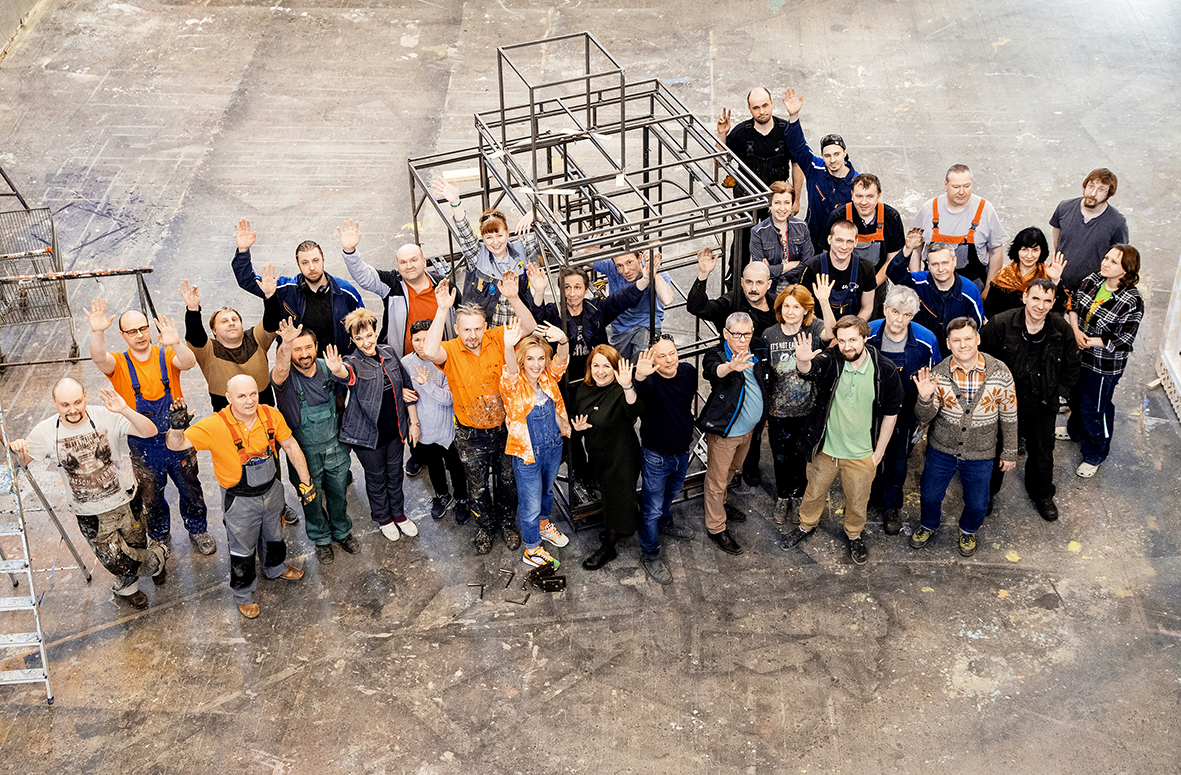
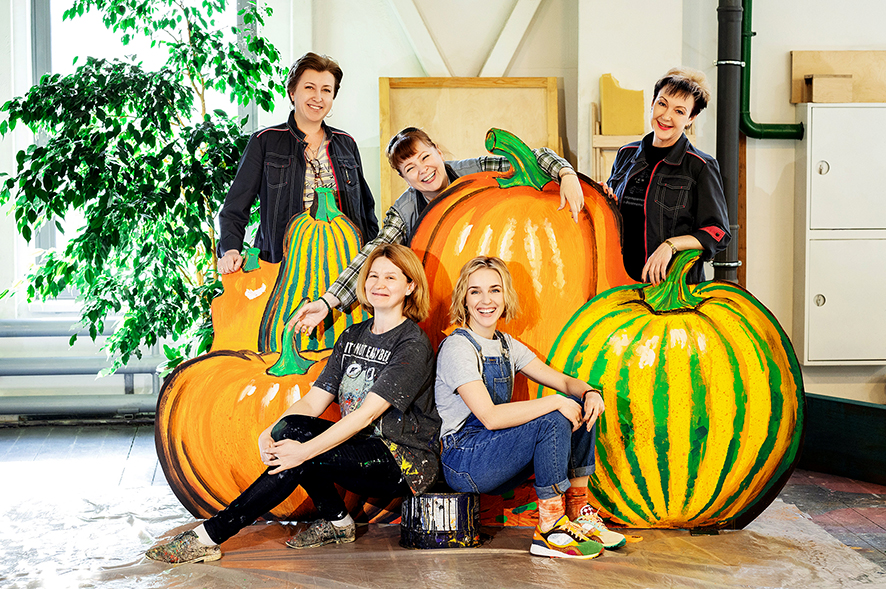
- The artist's work with the workshops of the theater. This is a unique and important stage for me in the work on the performance. And here, at the exhibition, the veil of secrecy will be opened: who and how creates the elements of the scenery, props, costumes. I worship people who serve in workshops of the theater, I appreciate their work, I consider them co-authors of my work, so part of the exposition will be devoted to them.
And how can audience accustomed to a finished performance "read" a sketch?
- To turn on children's perception, to carefully look at the sketch and to immerse yourself in the drawn image. Openness of the heart helps immersion in a planar image.
What is your "dictionary" of expressive means? Are there any techniques that you recognizably use from project to project (working with color, scale, texture, convention)?
- My "dictionary," like the "dictionary" of any set designer, is extensive: I work with everything that you have listed: with scale and with texture and with a degree of convention and with light and special effects, with small chamber spaces and large opera scenes. Here, the whole question is how and what point to use your "vocabulary" at and this is the very magic that we are not mentioning for the first time.
How do reality and convention come together in your work? For example, how similar should an object in a sketch be to a real object and when can it be turned into a sign or symbol?
- It depends directly on the specific performance and the specific task that faces me. Those who come to the exhibition will find the answer to this question.
How can you see traces of dialogue with the director at the exhibition? Is there an "imprint" of other people's ideas in the sketches that you melted into your shape?
- There is a dialogue with the director in all my works - to one degree or another this is a necessity and the essence of the work of a theater artist.
Whose professional skills (technologists, props, lighting artists) most often become the "secret ingredient" of the success of your idea?
- The success of the implementation of the scenographer's idea on stage is definitely teamwork, the ability of the scenographer to equip all technical personnel to implement their idea. The theater's technical services team is a kind of orchestra in which every instrument is necessary and important and the set designer is the very conductor that drives the score of his creative theatrical plan.
What is the most valuable thing for you in a sketch as an independent work of art? Is it a document of design, independent graphics or a "draft" of a scene?
- A sketch is a guide to a scenographic idea. This is a graphic or pictorial design by the artist that can be "read" by the director and artists.
If the audience could take one "instruction" from the exhibition on the perception of the theater, what would it be? One rule is how to look at the stage and to notice the work of the artist.
- "Open your heart."
Oh, how deep and valuable a parting word. Maria, what is the most inspiring thing for you in the work of a set designer?
- Both in life and in the work of the set designer I am inspired and driven by love. Love in all its diverse and incredible manifestations!
***
We invite you to visit the exhibition "Artist. Love. Theater" from 11 July to 3 August.
Grand opening - 11July at 5:00 PM.
Opening hours: Tuesday - Sunday, from 1:00 PM to 7:00 PM, Monday - day off.
Admission is free.
Interviewed by Member of the Union of
Theater Workers of the Russian Federation
Eleanora YAMALEEVA
photos from Maria UTROBINA’s personal archive