
Living man-made nature
This time, the artists - employees of the Institute and city creative groups were surprised by the fact that in the application to visual impressions you can get knowledge of the world around you. We offer readers a mini‑tour describing some of the paintings.
Three natural zones: swamps, a transition zone (the area between marshland and pine forests, the so‑called mixed forests) and blueberry pine are presented at the exhibition.
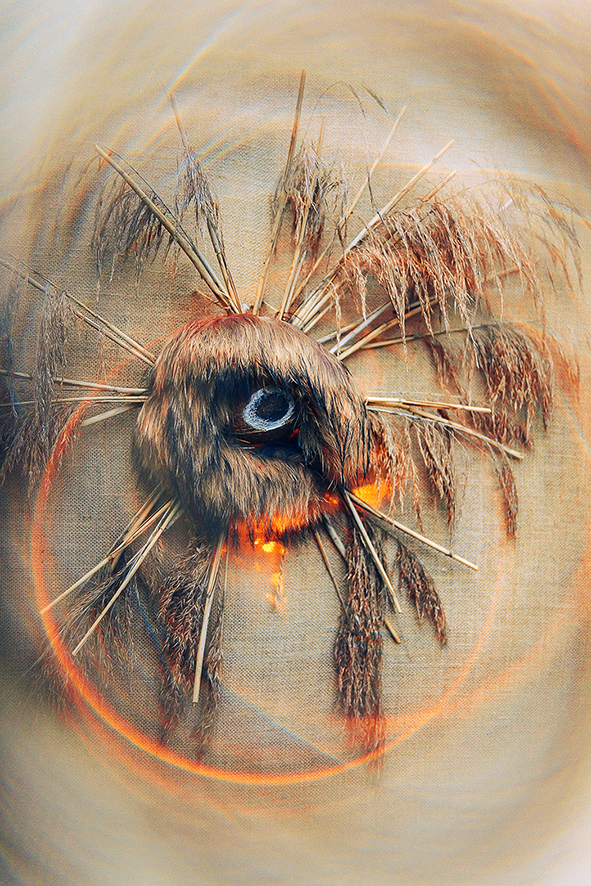
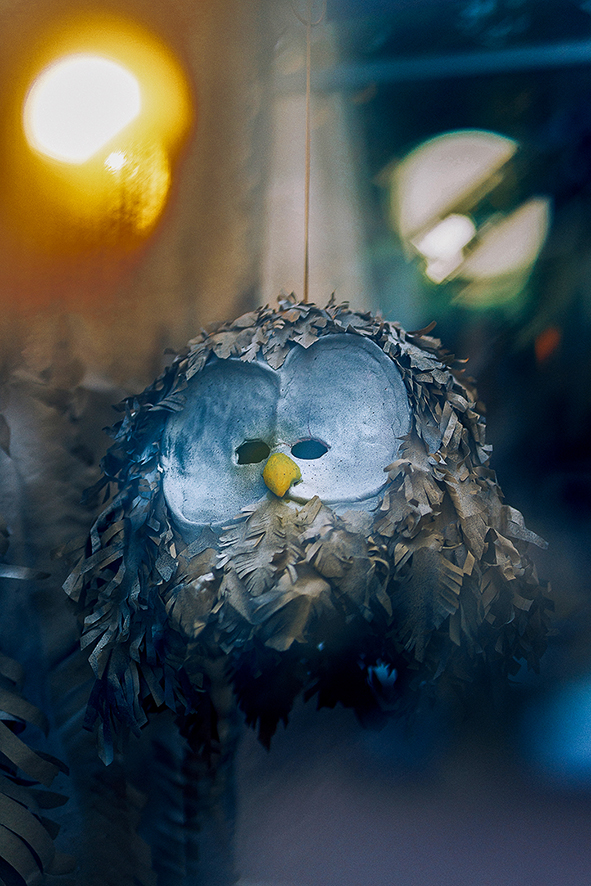
Unusually, the marshes greet spectators with dawn rather than a dreary brown-green scale. On the canvases of Katerina Slotvitskaya, Natalia Serova and Natalia Dashkina, trees and water appear mysterious, in unusual colors, here you can also meet the inhabitants of these places. For example, orchids made of papier‑mache. Or owl - one of the representatives of the owl family, made in the form of a mask that can be tried on. It sometimes flies over the swamp, it is quite difficult to take pictures with it in the forest. But the mask of the youngest participant in the exhibition, Maryasha Sapozhnikova, will make you the owner of a rare picture - with obscurity.
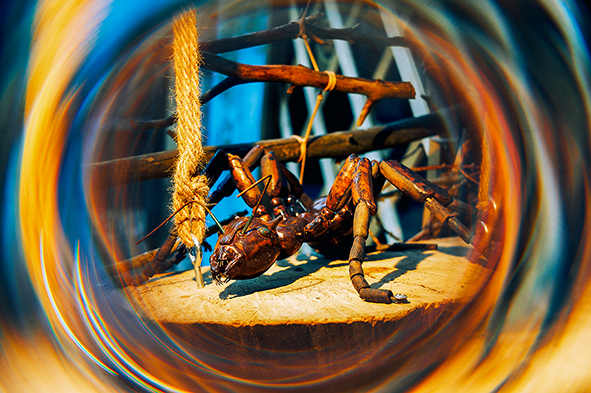
A predatory ground beetle, "crawled out" of the hands of Nastya Zlobina and Nikita Moiseev, perched among wild orchids, watching the heron that froze in harmonious calm with nature - this was portrayed by Natalya Serova.
A mosquito hangs right over your head, but you can not be afraid of it. It is as safe as it is beautiful - this is how Igor Kozlov saw and portrayed it.
As you progress, you find yourself in a transition zone. It is presented in all its glory, in the daytime. All the attractiveness and beauty of our forest is conveyed by the canvas of Nastya Zlobina. A fragment of the forest on the Big Volga, taken as the basis of the composition, shows us the aspen, birch, spruce, pine and mountain ash growing here. It is difficult not to pay attention to the bizarre spherical sarcosomes of Anna Vertogradova, Georgy Sedykh and Nastya Zlobina. Nine ceramic sarcosomes are randomly lit and extinguished, you can't take your eyes off them, so adorable are they.
Natalya Serova's lilies of the valley are pacified in the sun and Alina Sazhneva's pine cones and needles are frozen in epoxy resin, as if in a dance, uniting our usual forms and textures in the composition. Among the mosses, you can see the muskrat skull and partridge feather.
Here, you will also see many doors, the surface of which resembles the bark of a pine. Behind them lurked rare Red Book species of flora and fauna of all three zones, living in the vicinity of Dubna. The most unusual is sundew, a predator plant that releases a liquid that lures insects by eating them, the plant receives mineral substances missing in the soil. It will be interesting to learn about the rest of the species: Fuchs palm root, common bearberry, wolfberry and others. The authors of this composition are Irina Orlova, Nastya Zlobina, Anna Vertogradova, Anna Kozlova and Igor Kozlov.
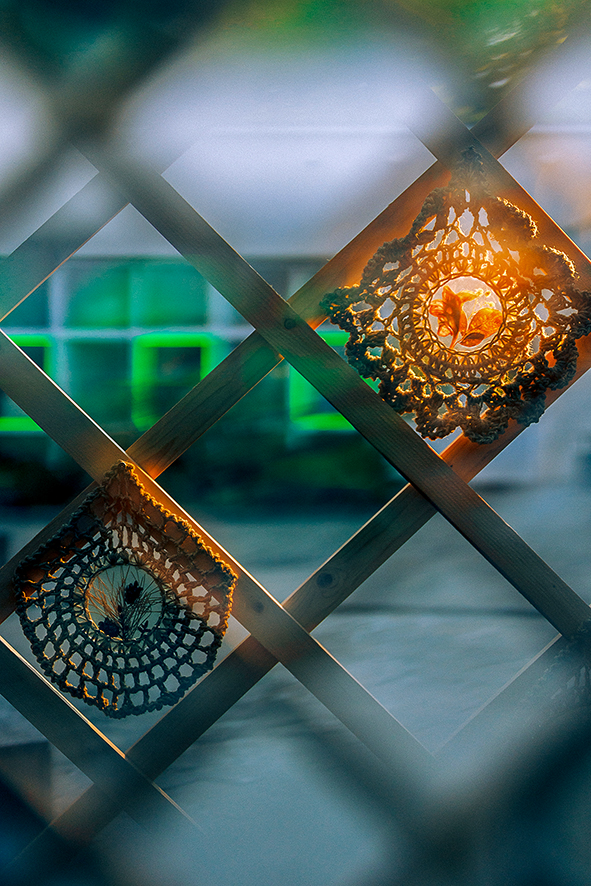
The last zone of exposure is the usual blueberry in a coniferous forest. Usney hanging almost falls on the ant of Olga Solntseva that froze in front of the panel with bedbugs-soldiers of Katerina Slotvitskaya. The ant is made of ceramics, the panel is knitted from yarn. Several starlings of Sergey Morozov and Nikita Moiseev fly over your head, they carry weights in their beaks that indicate rare species.
The rays of the warm setting sun illuminate pines, spruces and blueberries on two canvases, one of which was created by Anna Kozlova and Anastasia Nikolaeva, the other - by Nastya Zlobina and Nikita Moiseev.
On an impromptu stage in the centre of the exhibition, Tatyana Elisheva, Irina Orlova, Nastya Zlobina, Vladimir Malinin created a carriage. It shows the placement and interaction of rare Red Book species of plants and animals on the example of the Chernorechensky forest.
Separately, I would like to draw your attention to the weather in which you inspect the exposition. In the bright sun, bizarre shadows are formed here, falling on the canvases - they create new details, show the paintings of artists in a different color. In windy weather, the canvases move and the forest comes to life. If it has rained, the water that is on the roof scatters lively, dynamic glare throughout the exhibition. All this creates a special mood and makes the exhibition unforgettable. Living forest created by hands! We hope that you will inspect the exposition as carefully as you treat wildlife.
Article by Anna KARPUK,
Photos by Daria KONOVA