
About the history of PEPAN and Physics of Elementary Particles and Atomic Nuclei, Letters journals
The idea of publishing a periodic collection of review scientific articles at JINR in the late 1960s did not arise by chance. It was due to the revolutionary development in the 1960s of the last century of particle physics, when by outstanding physicists of the world, including to a large extent in the writings of Dubna scientists, the foundations of understanding the quark structure of matter were laid, the phenomenon of violation of CP symmetry in weak interactions was discovered, muon neutrino was discovered, a large number of new elementary particles and resonances were discovered, others that in the end, resulted in the development of the Standard Model of elementary particles - the gauge theory of strong and electroweak interactions. During these years, along with breakthrough theoretical research, new accelerator centres and unique experimental facilities were developed. In Dubna, the most powerful (until 1960) proton accelerator was constructed that operated on the basis of the revolutionary principle of autophasing proposed by V. I. Veksler. In those same years, neutrino physics became the subject of experimental research. It was in Dubna that the idea was put forward of constructing major underground and underwater neutrino facilities, today widely known in the world of neutrino telescopes. In the field of nuclear physics, the most relevant was the investigation of the structure and properties of nuclei distant from the stability, including superheavy nuclei. The programme of artificial synthesis of superheavy elements on the basis of unique isochronous cyclotrons developed for these investigations and facilities with beams of radioactive nuclei glorified Dubna. At the same time, the condensed matter physics was no less widely developed, research was carried out in radiation biology and medicine, including the use of neutron beams from the Dubna pulsed fast neutron research reactor (IBR, IBR‑30).
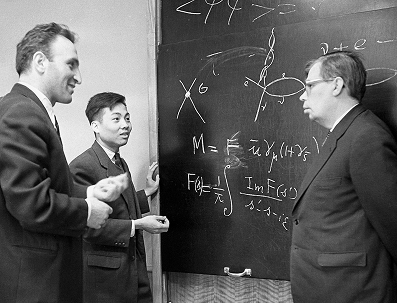
In order for all these achievements of Dubna scientists to become the property of the general world scientific community, in 1970, the review journal “Physics of Elementary Particles and Atomic Nuclei” (PEPAN) was founded at JINR. Note that the history of the development of this journal began a little earlier. Namely, on 24 June, 1968, at the JINR science and production meeting (at present, STC), it was decided to recommend that the Institute's Directorate consider publishing JINR proceeding papers. The Committee established by order of Director of the Institute Academician N. N. Bogolyubov, chaired by Vice‑Director of the Institute (from 1968 to 1970), Academician of the Bulgarian Academy of Sciences H. Ya. Hristov, recommended the 15th session of the Scientific Council (January, 1969) to positively meet the issue of publishing the proceeding papers of JINR. This proposal was made at the Scientific Council by the representative of Vietnam, an outstanding scientist that is a member of the scientific group of N. N. Bogolyubov Nguyen Van Hyeu.
So, by the end of the 1960s, many JINR scientists with world‑class scientific qualifications had accumulated a large amount of valuable scientific material. Therefore, there was a need and fortunately, there was the possibility of creating a collection of reviews on the scientific achievements of scientists of the Institute and their colleagues from other scientific centres. It was supposed to start publishing the collection in 1970. The Scientific Council approved this proposal and on 29 April, 1969, by order of JINR No. 22, signed by Vice Director H. Ya. Hristov, a periodical publication of the collection entitled "Problems of Particle Physics and Atomic Nuclei" was established. The membership of the editorial board included:
1. N. N. Bogolyubov - Editor-in-Chief;
2. A. M. Baldin - Deputy Editor-in-Chief;
3. Nguyen Van Hyeu - Deputy Editor-in-Chief;
4. V. G. Solovev - Deputy Editor-in-Chief;
5. P. S. Isaev - Executive Scientific Secretary.
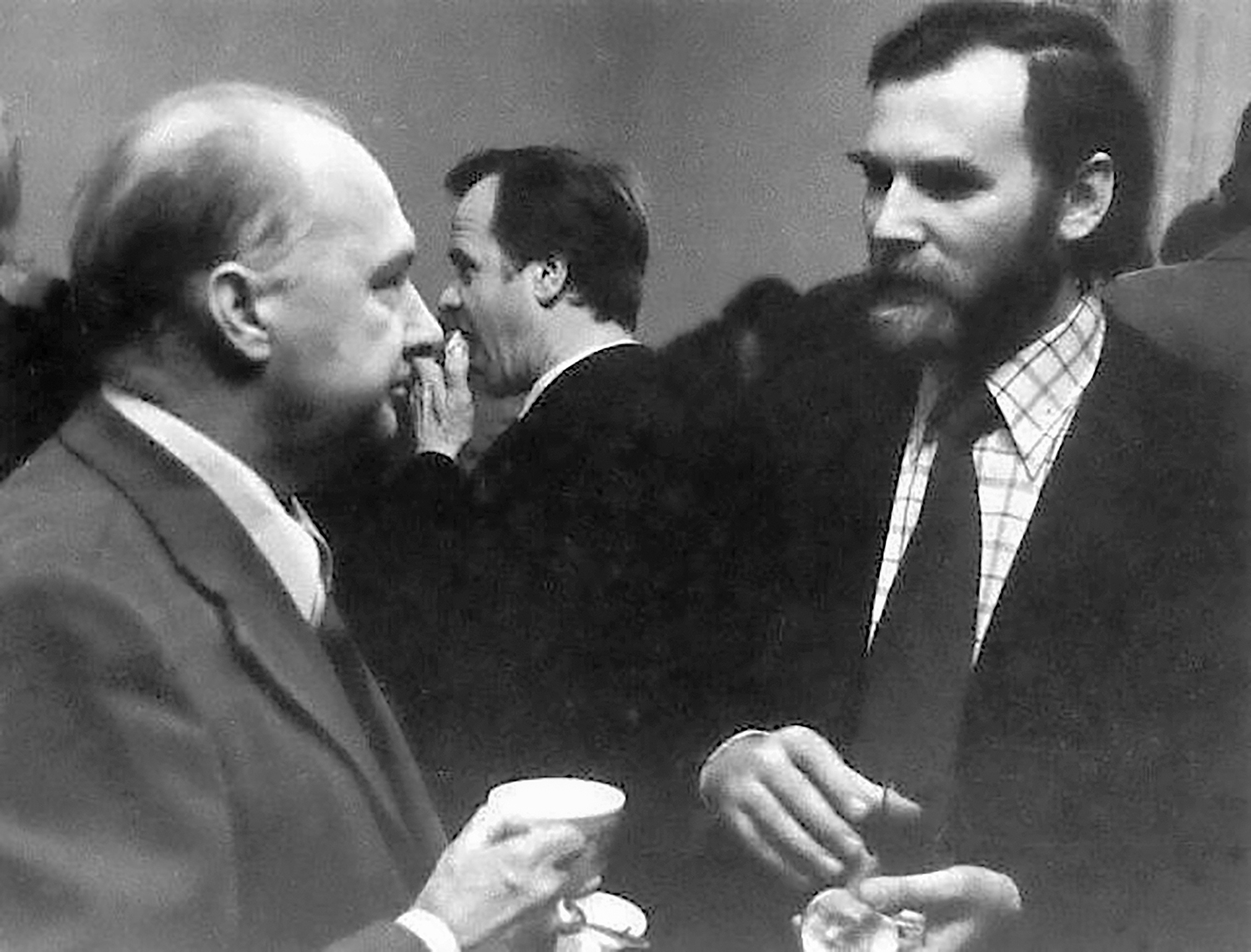
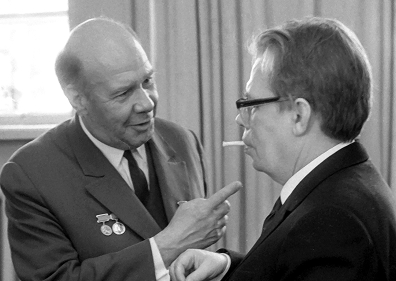
The membership of the editorial board also included K. Alexander, D. I. Blokhintsev, V. P. Dzhelepov, V. G. Kadyshevsky, N. Kroo, R. M. Lebedev, M. M. Lebedenko, M. G. Meshcheryakov, I. N. Mikhailov, S. M. Polikanov, A. A. Tyapkin, G. N. Flerov, I. M. Frank, H. Ya. Hristov, A. Khrynkevich and Sch. Tsitseyka.
The first issue consisted of seven reviews:
1. V. A. Nikitin, "Investigation of elastic scattering of protons on nucleons in the energy range 1‑70 GeV";
2. A. A. Logunov, O. A. Khrustalev, "Probabilistic description of scattering at high energies and smooth quasi‑potential";
3. B. R. Garsevanishvili, V. A. Matveev, L. A. Slepchenko. "Hadron scattering at high energies and quasi‑potential approach in quantum field theory";
4. Samuel Ch Ch Ting, "Interaction of photons with matter";
5. V. V. Serebryakov, D.V. Shirkov, "Shortwave repulsion and broken chiral symmetry in low-energy scattering";
6. S. M. Bilenky, "CP invariance violation in neutral K meson decays";
7. G. V. Efimov, "Nonlocal quantum scalar field theory".
Undoubtedly, the team of authors of the first collection was selected taking into account the decisive opinion of N. N. Bogolyubov. In this regard, it should be highlighted that in the first issue, there is a review of the American physicist of Chinese origin S. C. C. Ting (Department of Physics, Massachusetts Institute of Technology) - the future Nobel Prize winner in physics ("For the fundamental contribution to the discovery of a new heavy particle: J/ψ meson", 1976). It immediately predetermined the increased interest in the first and subsequent issues of the collection not only in the Soviet Union, but also abroad. A collection was published by the Moscow publishing house “Atomizdat” that was part of the structure of the State Committee for the Use of Atomic Energy (under the Council of Ministers of the USSR). Distribution (subscription for libraries) and advertising of the collection in the Soviet Union was also carried out by the publishing house “Atomizdat”.
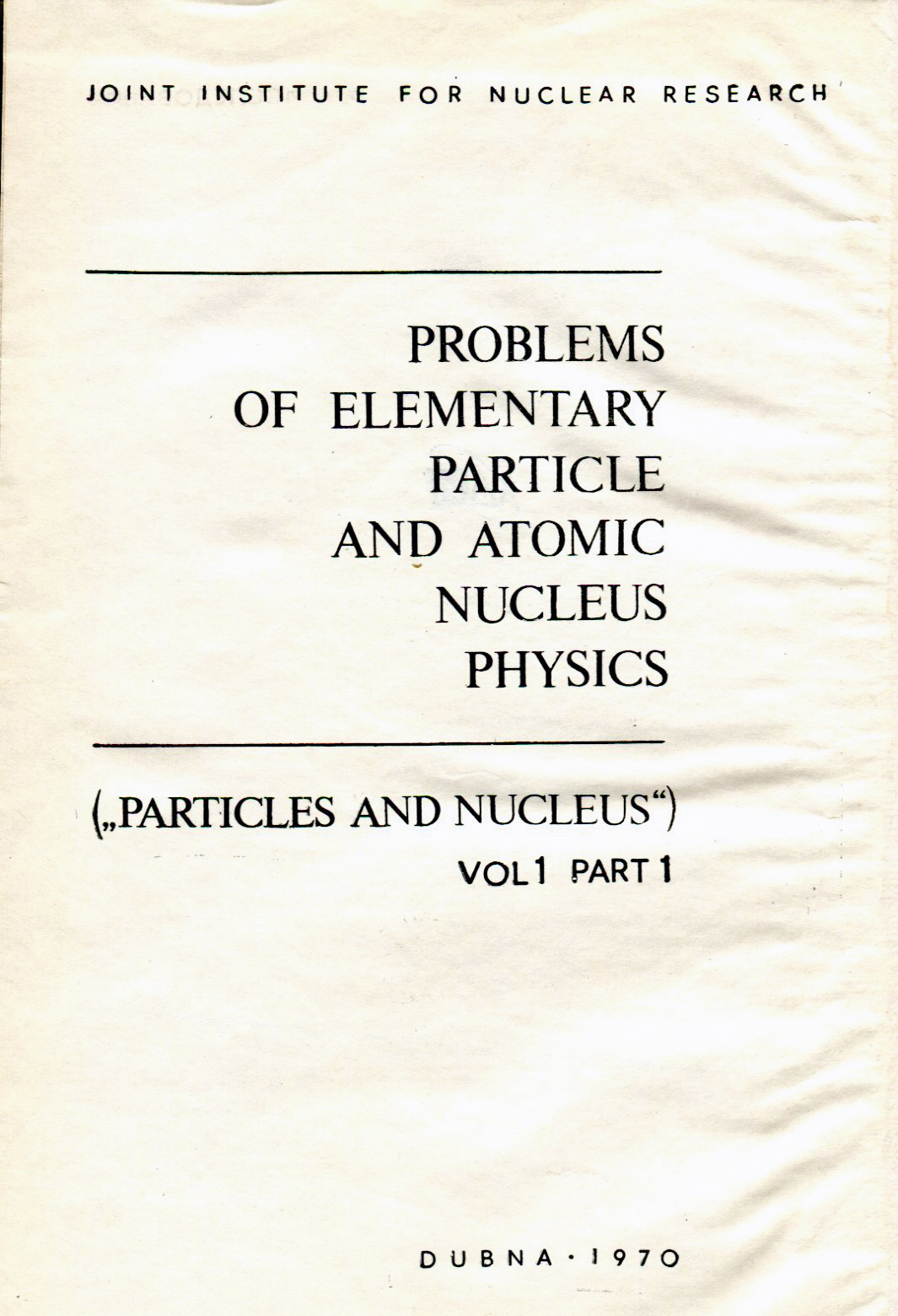
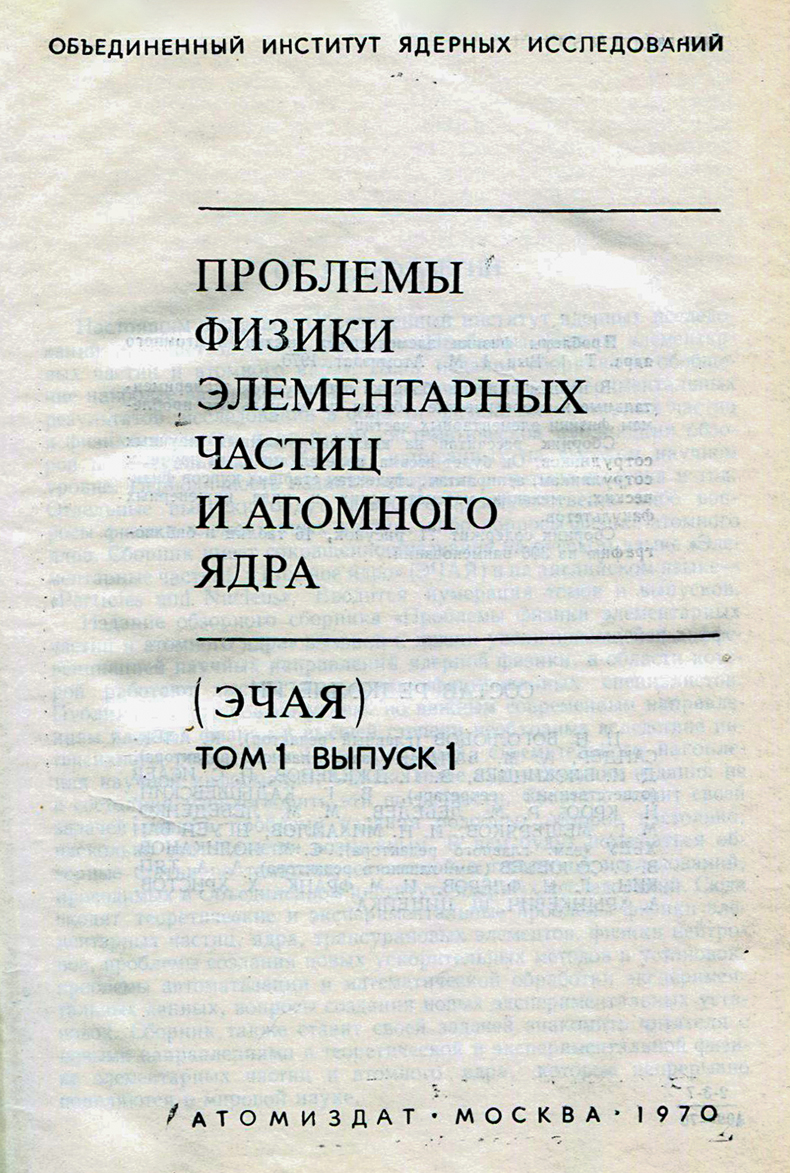
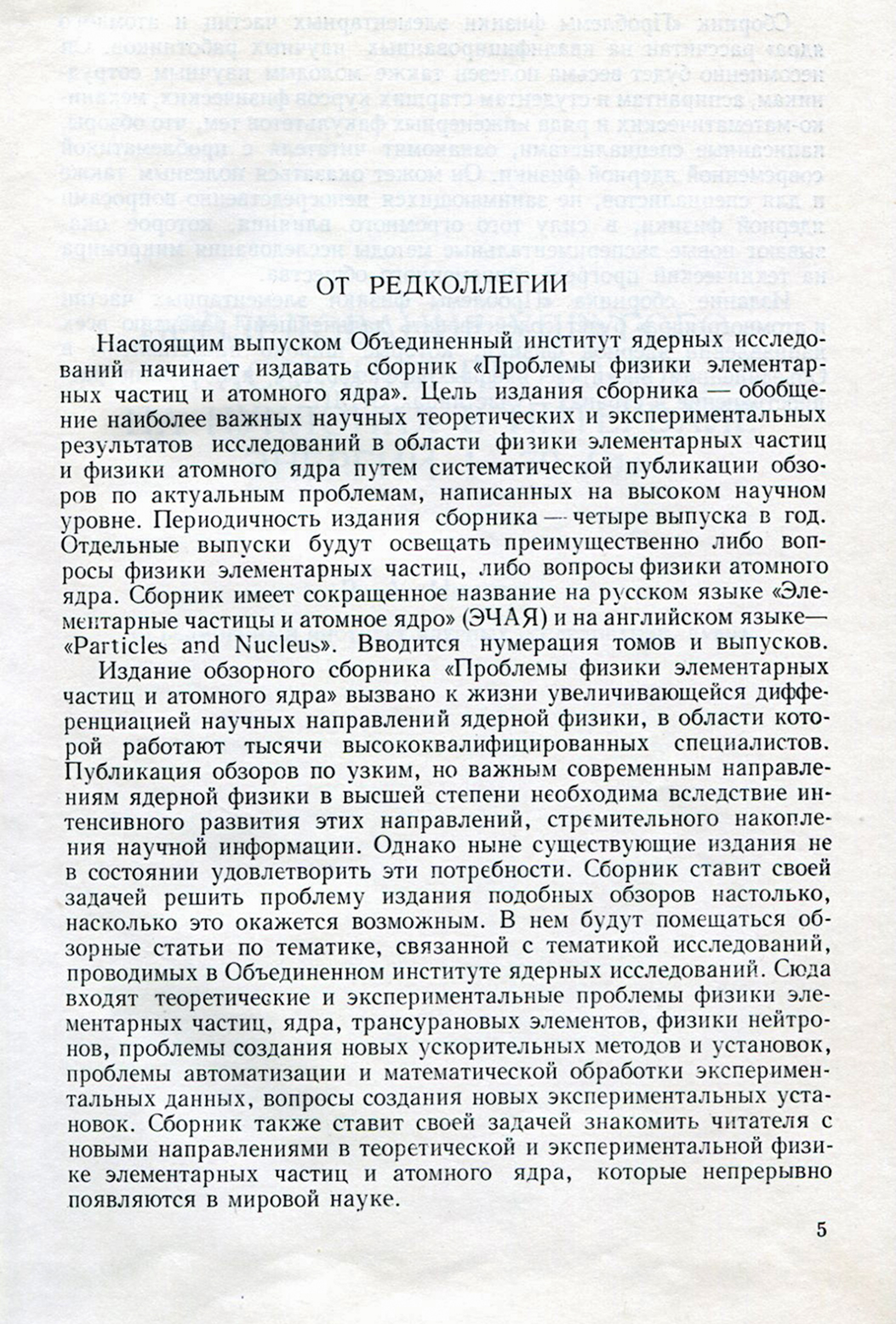
The successful publication of subsequent collections, their popularity served as the basis for the establishment of a journal on their basis. This transition was made during 1971. On 1 January, 1972, the journal "Physics of Elementary Particles and Atomic Nuclei" was published, on the title page of the first issue of which was "Volume 3, Issue 1. Quarterly journal. Founded in 1970". That is, the numbering of the volumes of the journal continued the numbering of the volumes of collections. Thus, continuity with the previous edition of the collections was preserved.
It should be highlighted that in the USSR, a scientific publication became a journal only on the basis of a resolution of the Central Committee of the CPSU on the establishment of this scientific journal. The media sphere and the activities of publishing houses were supervised by the Propaganda Department of the Central Committee of the CPSU. The allocation of resources for the publication of scientific journals in the USSR was carried out via centralized management and financing system, where key decisions were made by state bodies. Financing was carried out from the union budget. Therefore, the procedure for all approvals and the passage of numerous bureaucratic instances to obtain the status of a journal required time and considerable effort. According to the memoirs of P. S. Isaev that was engaged in these technical issues, the name of N. N. Bogolyubov "opened many doors".
The active and fruitful work of the editorial board, a large number of relevant proposals from highly qualified review authors, the wide popularity of the journal - all these factors resulted in the fact that in 1976, the Editor‑in‑Chief of the journal N. N. Bogolyubov set the task of turning to the publication of six (instead of four) issues per year.
All the years before perestroika and the collapse of the USSR, the editorial board was engaged in scientific policy, the search and publication of high‑quality scientific reviews that develop the most relevant scientific areas in elementary particle physics and the atomic nucleus. The following tasks were set for the editorial board to improve the quality of review articles and to increase the scientific level of the journal: reviews should be written on key topics of contemporary elementary particle and nuclear physics; the authors of the reviews should be well‑known, extensively working scientists from both JINR and JINR Member States, as well as scientists from other countries representing advanced research centres, that is, the "geography" of the reviews should be quite wide; it is necessary to expand the scientific subject of the journal in accordance with the new areas included in the JINR Topical Plans; if possible, to observe optimal proportions in the number of published experimental, theoretical, methodological and "applied" reviews. This policy resulted in the fact that about half of all reviews were written by scientists from JINR and about a third of all reviews - by scientists from institutes of JINR Member States (including the USSR).
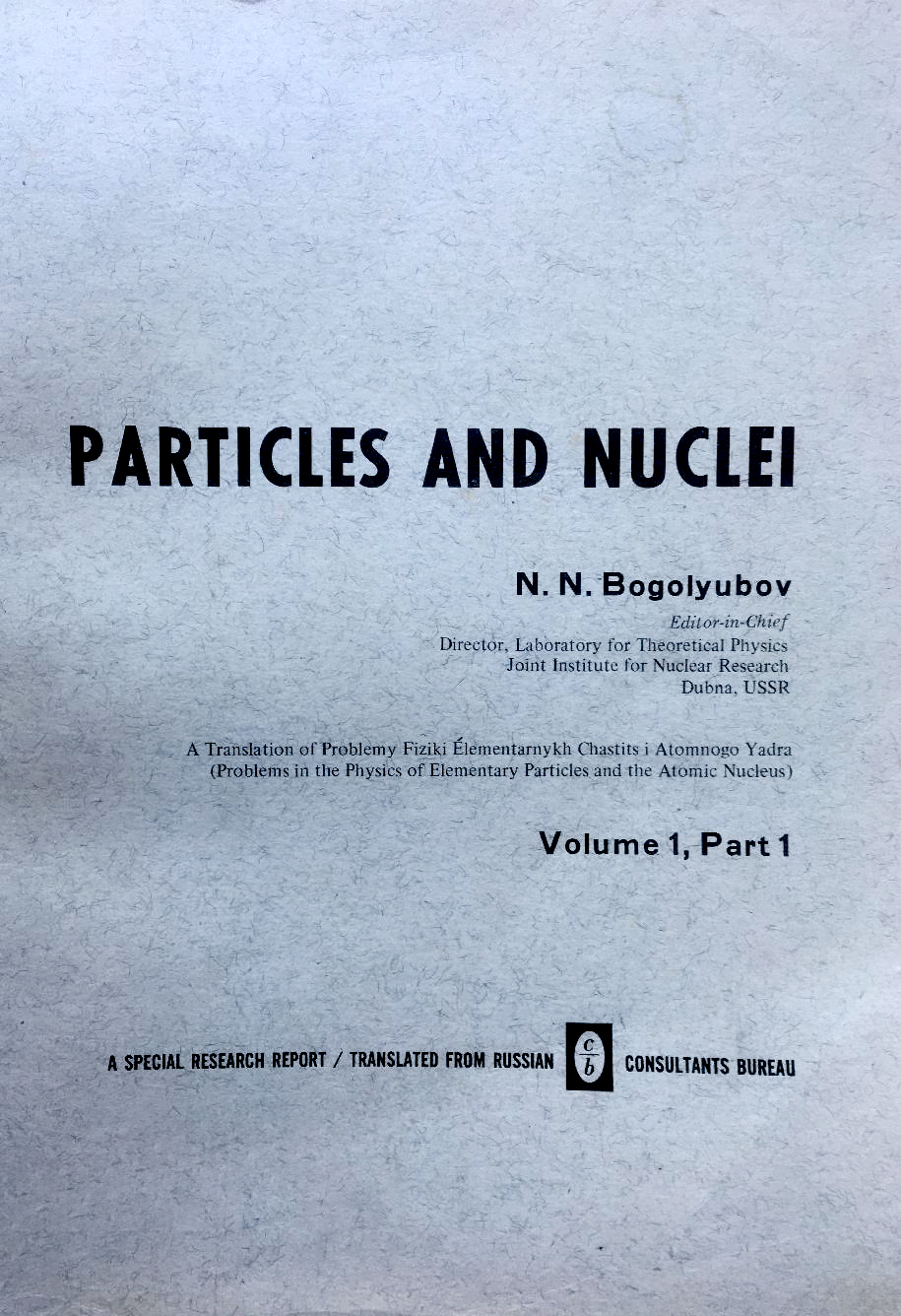
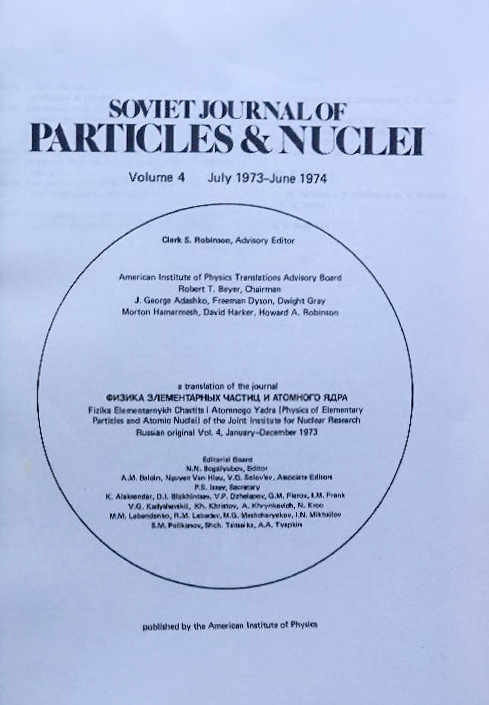
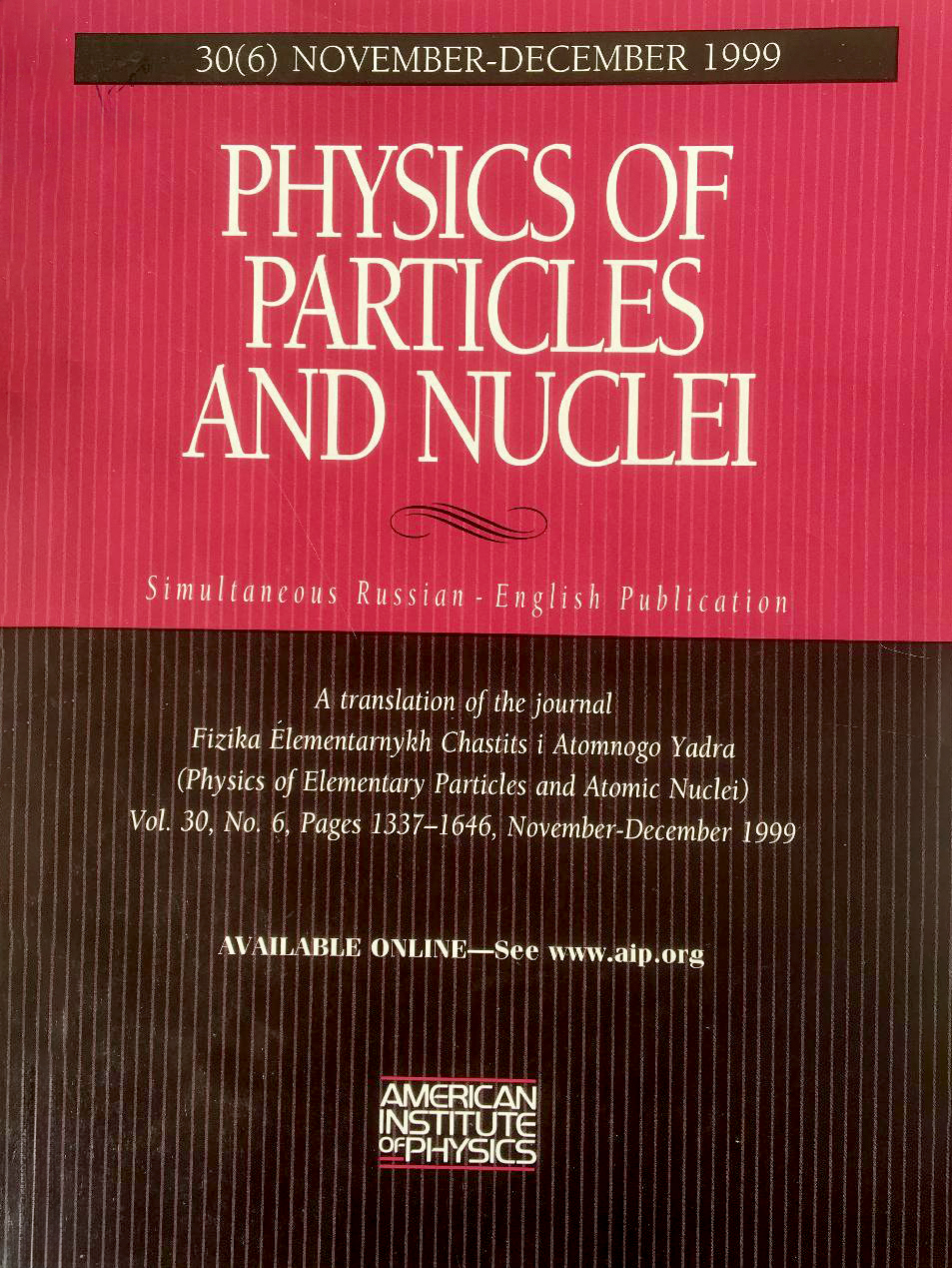
Since 1972, the PEPAN journal has been translated and published in English. First, under the name Particles and Nuclei in the well‑known American publishing house Consultants Bureau Enterprises that specialized in publishing scientific literature and translating Soviet and then Russian scientific journals into English. Subsequently, this publishing house became part of the large publishing corporation Plenum Publishing Corporation (since 1998 it was acquired by the international publishing giant Springer). From July 1973 to December 1999, the American Institute of Physics (AIP) was engaged in the translation and publication of the English version of PEPAN journal called Soviet Physics of Particles and Nuclei. It is interesting to highlight that in the first decades of the journal's existence, the delay between the release of the original Russian‑language volumes and their official translation into English ranged from one to one and a half years.
Until the beginning of the 1990s, meetings were organized in Dubna with the heads of “Atomizdat” (since 1982, “Energoatomizdat”) that printed the basic Russian‑language version of the PEPAN journal. These meetings were attended by Director of “Energoatomizdat” A. P. Aleshin and the head of the editorial board of nuclear physics literature S. K. Breshin. Plans for publishing literature (not only the PEPAN journal, but also books and monographs) on nuclear physics and elementary particle physics were discussed. In the 1990s, the transition to a market economy hurt the publishing houses of the former USSR that published small‑circulation literature, including scientific. Such publishers have practically lost budget funding. It came to the point that Directorate of “Energoatomizdat” applied to the JINR Directorate with a request to allocate material resources for them to publish the next volumes of the PEPAN journal. In this regard, since 1 January, 1992, it had been decided to print the Russian‑language version of the journal in the JINR Publishing Department.
But even earlier, in May 1991, the publisher of the American Institute of Physics (AIP) turned to JINR Directorate, as the founder of the journal and to the Editor‑in‑Chief of the journal N. N. Bogolyubov with a proposal to turn to direct relations with AIP starting from 1 January, 1994. It took into account the fact that the AIP agreement with the All‑Union Copyright Agency (AUCA) that represented the interests of the founder and publisher of the Russian version, expired on 31 December, 1993. The draft "Protocol" and "Agreement", proposed by the American party, were considered in detail at a special meeting of the PEPAN editorial board on 16 September, 1991. These drafts were amended and supplemented accordingly and a reply letter to AIP was sent in October 1991. Approved versions of the "Protocol" and the "Agreement" with AIP to issue the PEPAN in English were signed in late 1991 - early 1992.
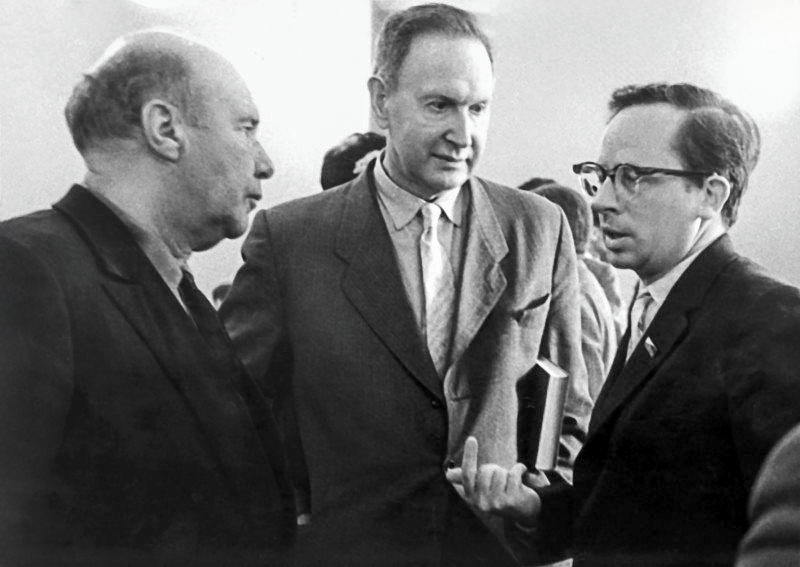
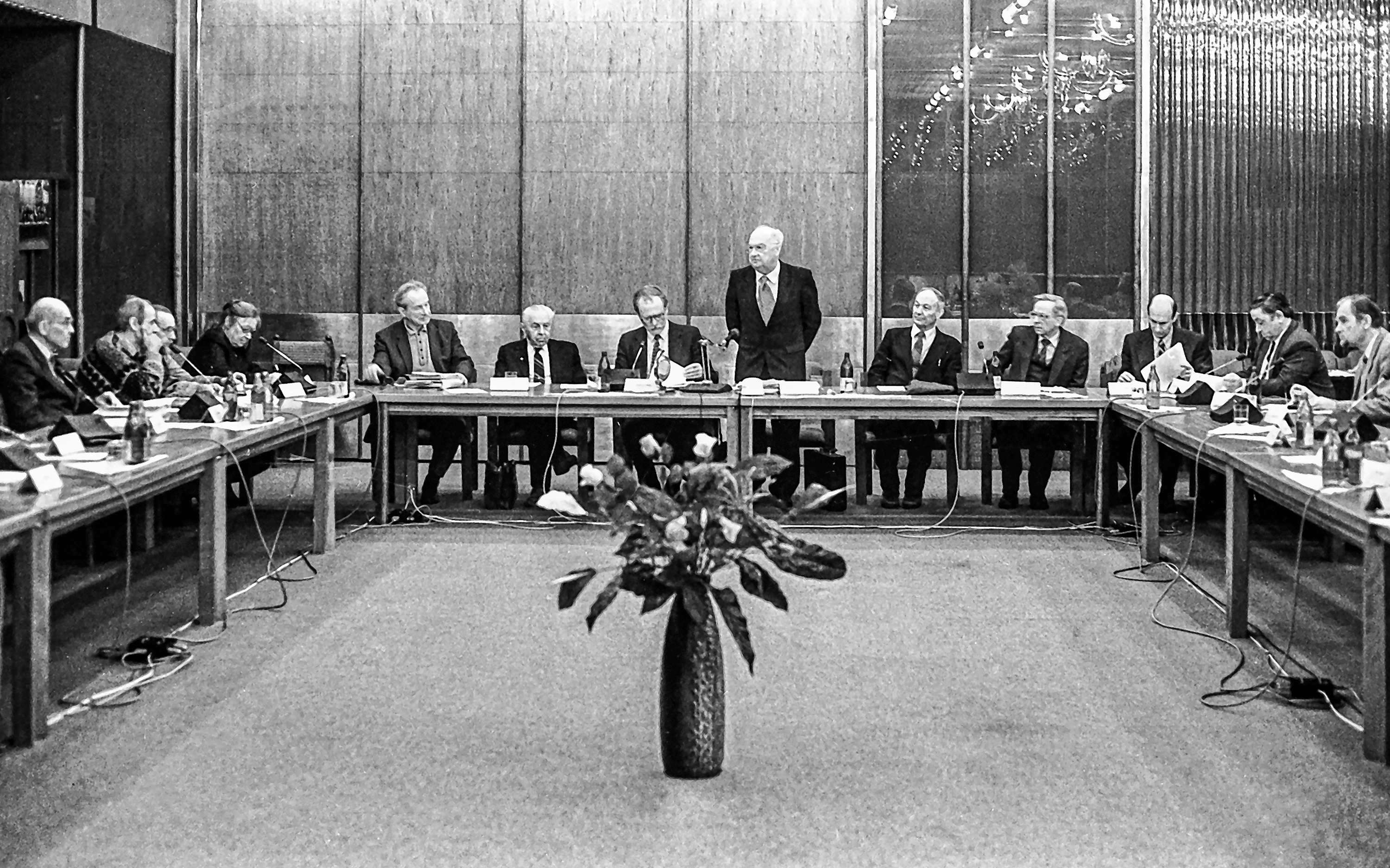
In February 1992, N. N. Bogolyubov died, whose name the status of PEPAN was largely associated with. Academician A. M. Baldin (in the center in photo) is appointed Editor‑in‑Chief of the journal and since 1 January, 1994, direct cooperation between the editorial board of the journal and the AIP publishing house has started.
In Russia, in the early 1990s, the first postal Internet services began to appear, including those provided by commercial providers (Relkom, others). Taking into account the high degree of computerization, JINR developed its own postal Internet services (the company “Contact”) and it allowed the PEPAN editorial board and the Institute's Directorate to contact AIP in a short period and to meet all the technical problems of publishing the journal both in Russian and English. Translations into English of reviews written in Russian were mainly performed by AIP translators, partly done by the authors of the articles. Since 1997, AIP has started work on the publication of electronic versions of all Russian journals translated by it, including PEPAN. A new era began in the publication of scientific journals, associated with the gradual abandonment of paper versions and with a complete or partial transition to a paid online format.
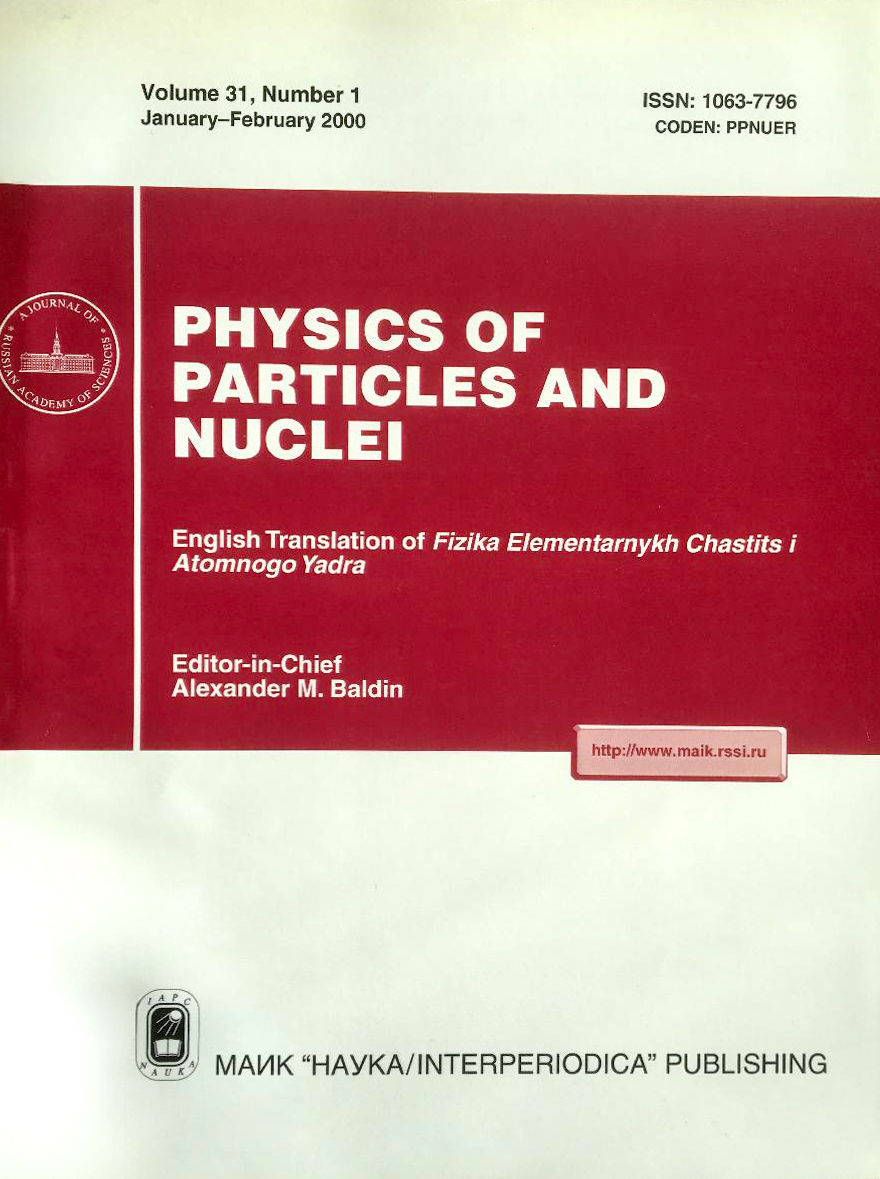
The contract with AIP on the translation of PEPAN journal into English ended on 31 December, 1999. In January 1999, at the next plenary meeting of the editorial board of the journal, the Editor‑in‑Chief A. M. Baldin announced the decision to terminate direct cooperation with AIP. It was announced that a new agreement would be concluded with the International Academic Publishing Company IAPC "Science/Interperiodics". Among the founders of this company were the Russian Academy of Sciences, the American company Pleiades Publishing, Inc. and the Russian publishing house “Nauka”. It should be emphasized that AIP did not refuse to cooperate but proposed new terms of the contract that seemed not entirely acceptable for legal and financial reasons. In addition, the decision to start cooperation with IAPC “Nauka/Interperiodika” was apparently made by the RAS Directorate in most Russian academic journals and PEPAN simply followed the policy pursued by the RAS. The first contract with IAPC “Nauka/Interperiodika” was signed on 19 June, 1999 for a period of six years. It started functioning on 1 January, 2000.
To be continued in the following issues
RAS Academician, Editor‑in‑Chief of the PEPAN journal V. A. MATVEEV,
Professor, Editor‑in‑Chief of "PEPAN, Letters" A. P. ISAEV