
One life - a moment in the history of science
To the 90th anniversary of the birth
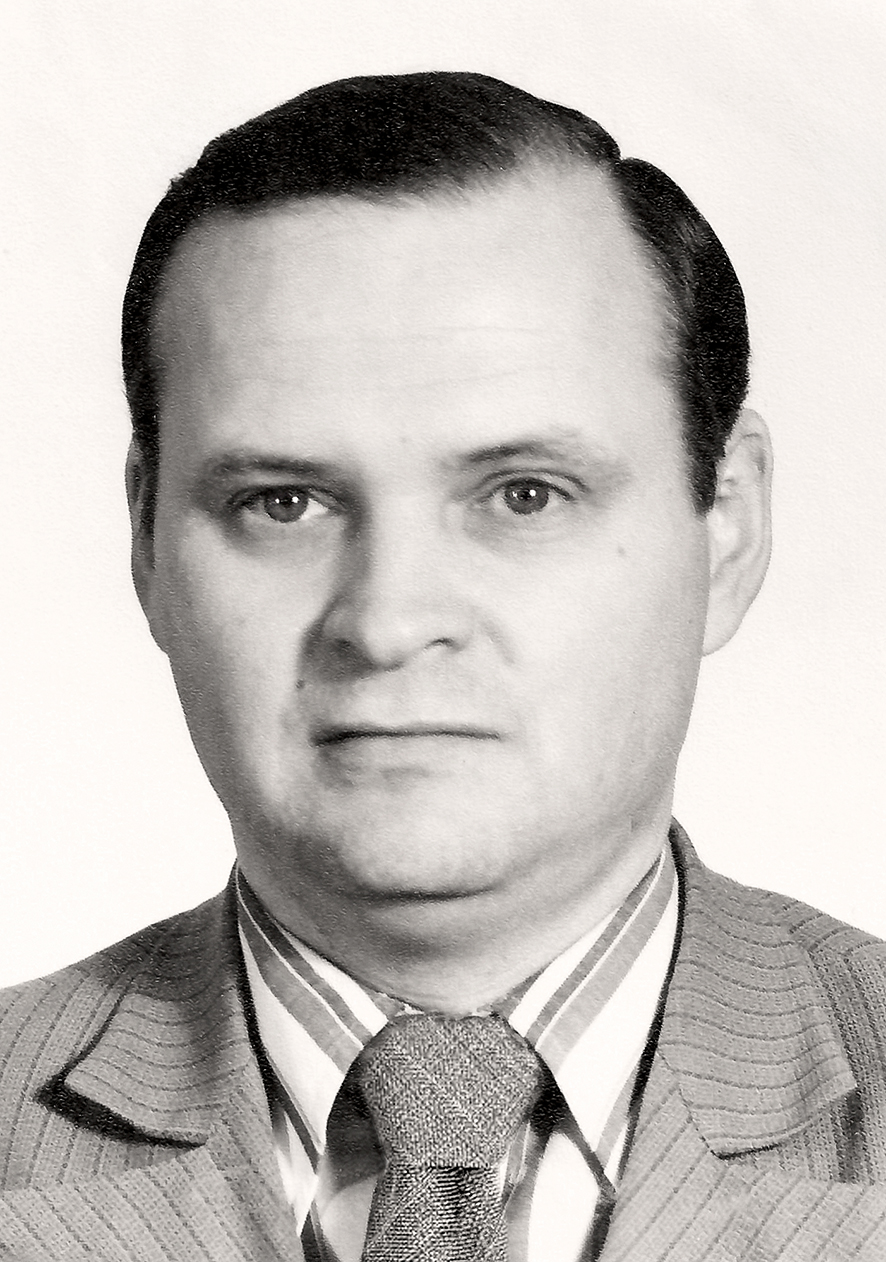
The main achievements of A. G. Artyukh can be found in the recently published collection of memoirs of colleagues, friends, fellow students: Anatoly Grigorievich Artyukh "Experimenter, organizer, optimist", as well as in the textbook "Experimental research of transmission reactions with heavy ions" and in the monograph of A. G. Artyukh "Experimental research of transmission reactions and fragmentation on beams of heavy ions. Experimental methodology and instrumentation".
It is difficult to imagine how Anatoly Grigorievich, a simple young man after three years of service in the army in the Far East, decided to dedicate himself to scientific activities. Apparently, that era, the Khrushchev Thaw in politics, culture and everyday life, developed internal motivation, the desire for self-realization, readiness for difficulties, optimism and perseverance.
The path to science for him began with preparation for university exams. Only intensive self-training allowed him to enter the Physics Department. Already in 1965, after having graduated from Moscow State University and an internship at JINR, Anatoly Grigorievich was employed in FLNR.
Well, then everything went like notes. He was actively involved in experimental research of the mechanisms of interaction of complex nuclei, synthesis and investigations of the properties of neutron-excess nuclei of light elements in reactions with heavy ions and based on the results of research in 1977, he defended his thesis.
A. G. Artyukh is one of the authors of the discovery of a new class of nuclear reactions with heavy ions, namely deep non-elastic nucleon transmissions. These reactions have been used to produce new heavy isotopes of light elements. As a result, for the first time in the world, more than three dozen previously unknown exotic nuclei were synthesized. The discovery of a new class of nuclear reactions is registered in the State Register of Discoveries under No. 229.
These outstanding results in the synthesis of new isotopes and the discovery of a new class of nuclear reactions were carried out on the Magnetic Sector Analyzer (MSA). The experience gained in the development of MSA and the investigations of reactions of deep non‑elastic transmissions was used by A. G. Artyukh in the design and construction of the COMBAS separator fragment (Complex of Fast‑acting Analyzer Spectrometer).
At the next stage of his ascent, he became the initiator and responsible executor of the COMBAS separator fragment at the U‑400M accelerator with parameters unique even in our time for obtaining beams of radioactive nuclei. It allowed expanding research of the properties of exotic nuclei near the boundaries of nucleon stability. COMBAS allows implementing research in the field of energies of accelerated ions, above Fermi energy, in which fragmentation reactions are dominant. It allows, firstly, approaching the stability boundaries when studying the properties of exotic nuclei and secondly, increasing the intensity of secondary beams by several orders of magnitude. In the latter case, according to the plan of A. G. Artyukh, the COMBAS separator fragment should have additional advantages over those operating in the world due to the increased pulse acceptance that was achieved by the special design of the wide‑aperture dipole magnets used in the COMBAS separator.
The physics of exotic nuclei with a large excess of neutrons or protons is currently a promising area in the development of atomic nucleus physics. COMBAS allowed experimentally studying nuclei with a large excess of neutrons and protons. Such as, the velocity, charge and isotope distributions of 18O reaction products (35 MeV/nucleon) on targets with a large (181Ta) and small (9Be) neutron excess were studied in detail. A significant increase in the yield of exotic nuclei was showed in reactions with nuclei with a high neutron excess that is of a general nature. Based on these and similar experimental data, theoretical approaches such as the classical dynamic model with friction and the kinetic model of nonequilibrium processes were developed that allowed explaining both the angular distributions of reaction products, including the orbiting phenomenon and the transition of kinetic collision energy to excitation energy of colliding nuclei, and the charge distributions of reaction products. In essence, a new area of research was discovered - nonequilibrium processes in nuclear matter. In addition, it was shown that during the investigation of deep non‑elastic collisions, it is possible to obtain data about the course of the process in time, as well as about the effect of the properties of interacting nuclei on the reaction mechanism.
Such investigations were made possible thanks to the COMBAS separator fragment. Parameter refinement was actively scheduled, proposals were developed on the use of the separator in obtaining a wide range of radioactive beams.
A. G. Artyukh was indeed an initiative, creative researcher with a wide range of scientific interests, a co-author of more than 110 articles in refereed journals. His scientific papers were awarded two first (1977, 1999) and second (1977) JINR Prizes. He focused on international scientific cooperation, was one of the organizers of numerous international symposia on the physics of exotic cores EXON. His authority and active work in the organizing committee allowed attracting a wide range of scientists from the USA (University of Michigan), France (GANIL), Japan (RIKEN), Germany (GSI) and other leading scientific centres in the physics of exotic nuclei to participate in the symposia.
Thanks to his conscious civic position, A. G. Artyukh more than once participated in scientific expeditions to measure the level of radioactive contamination in the thirty-kilometer exclusion zone during the period of active liquidation of the consequences of the Chernobyl accident (1986‑1987).
In addition to scientific and experimental activities in Sector No. 6 of the Structure of Light Exotic Nuclei of FLNR, A. G. Artyukh prepared lectures, supervised educational projects of Russian and foreign students and graduate students at the University Centre and since 2007 until his death, he was the first head of the Laboratory workshop of the Department of Nuclear Physics of the University "Dubna". The scientist shared his knowledge with enthusiasm, developed educational and methodological training programmes, relying on the current level of experimental technology and current scientific research of nuclear reactions.
A. G. Artyukh was an outstanding experimental physicist. Many of his ideas were not implemented. Death made its own adjustments and cut short his aspirations and undertakings. Anatoly Grigorievich will forever stay in everyone’s memory who knew him and worked with him.
With all this, he was a responsible family man, raised a son and two daughters that allowed preserving good and bright memories of him.
Friends and associates