
Schoolchildren as ambassadors
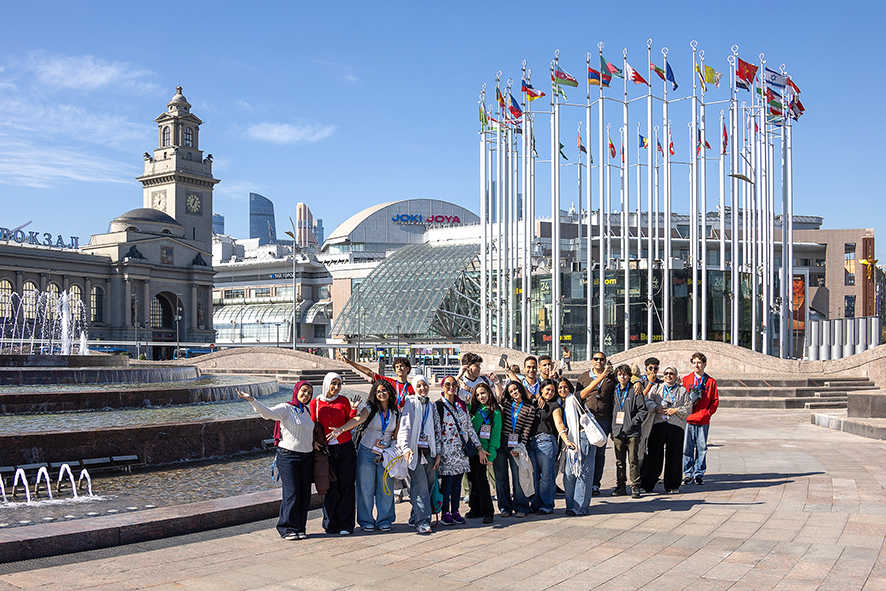
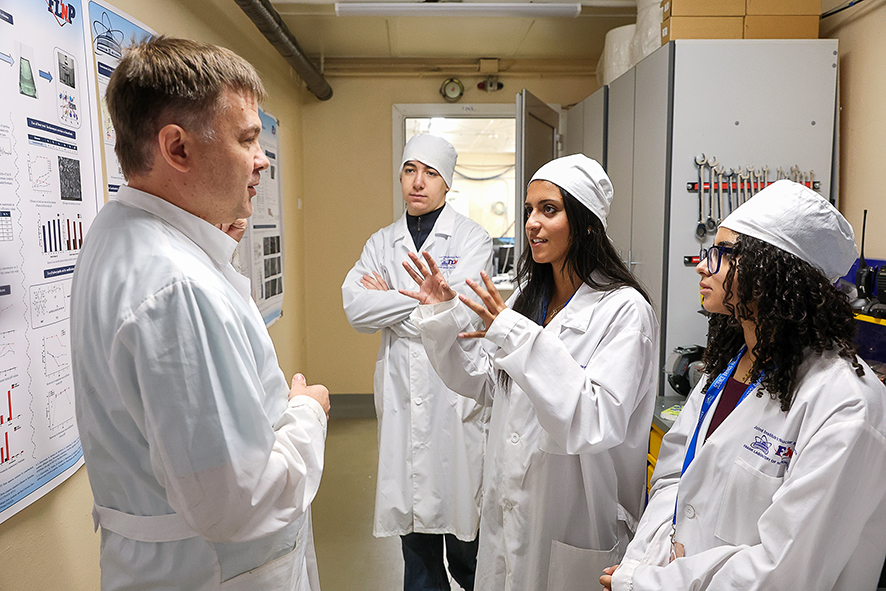
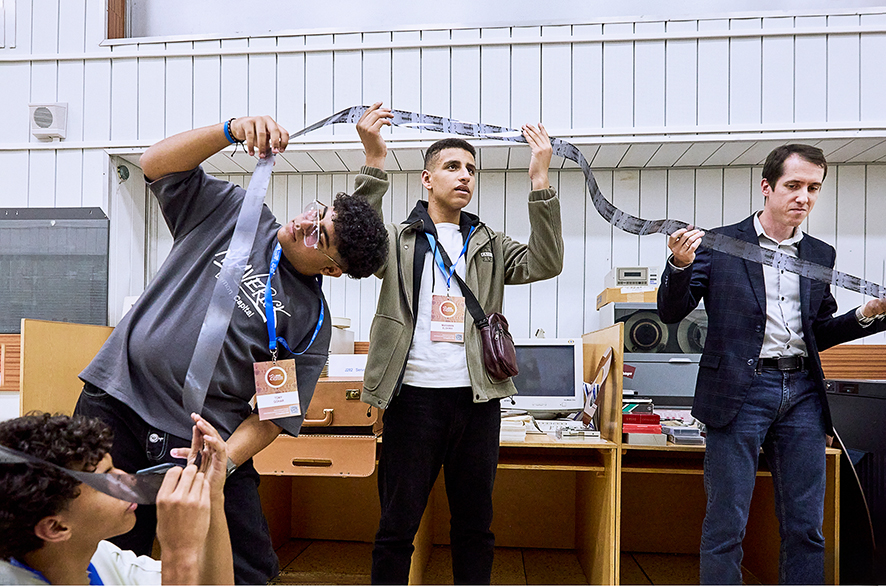
The School programme was rich. The participants visited the IBR‑2 reactor of FLNP, LRB, learnt about the JUNO and NOvA projects of DLNP, visited the Govorun supercomputer of MLIT, the DC‑140 accelerator of FLNR and the Superconducting Magnet Factory of VBLHEP. With the help of training programmes established by the Department of Yu. A. Panebrattsev, the School participants were able to study cosmic rays. The schoolchildren from Egypt met with the students of the Lyceum named after V. G. Kadyshevsky. The cultural programme included a trip to Moscow and a sightseeing tour of Dubna.
Before the start of the School closing ceremony, I managed to talk with two of its participants. "Over these few days, we have learned a lot about nuclear physics and other research at the Institute," Yassin Amer said. "I am going to engage in genetic engineering, it was interesting for me to visit LRB and in general, participation in this School was useful in terms of my future profession." "For me, I was interested in a lecture on the investigation of materials using neutrons that we were told about at FLNP, physical and chemical investigations carried out at FLNR, the NICA project," Nadine Ali shared her impressions. “There are a lot of interesting things here. I have gained new knowledge about the Universe, about how it arose, it will be useful to me for my future studies. We have also had a wonderful meeting with the students of the Dubna Lyceum."
Congratulating the School participants on its successful completion, Director of the UC D. V. Kamanin said, "You are now like ambassadors. Here you represent Egypt and when you return home, you will become JINR envoys" and invited everyone - schoolchildren and their leaders from Egypt to talk about their impressions of the week spent in Russia. The School participants, united in groups, made it easier for themselves with the help of Wikipedia, on the basis of facts which they built their performances from. As for the few personal impressions, the Egyptians liked Dubna - "a quiet, beautiful and very clean city", they made new friends from the Lyceum, they liked the Lyceum, its equipment and communication with Dubna schoolchildren did not interfere with the language barrier.
The leaders of the delegation approached the task more responsibly. In her speech, Samar Sharif agreed that the School participants can become JINR representatives in Egypt. She was interested in whether it was possible to exchange groups of schoolchildren through the programme of the Children's University of Egypt; how JINR and Egypt's National Research Centre could implement joint scientific research; in which areas cooperation was still possible.
Ganem Moamen expressed gratitude to the organizers of the School that helped everyone on this trip, thanked his schoolchildren for their discipline. Most of all, he was impressed by the enthusiasm of JINR employees for science; the very existence of a city the life of which is largely built around science; the opportunity to see the real Russia and not its image from foreign films. "Before this trip, my idea of Russia was formed mainly from films but after a personal acquaintance with the people, cities and nature of the country, I saw a completely different picture," Ghanem said. He believes that scientific cooperation opens up great opportunities for schoolchildren and students of both countries, science can not only unite peoples, but also contribute to peace.
It was difficult for Nohe Elrafi to describe in words the impressions of the past week. She wholeheartedly thanked JINR and the organizers for their help and the opportunities provided to the students. She considers it especially important that children did not just hear about scientific research but saw real science in action. They got acquainted with the scientists and learnt about research infrastructure of the Institute, began to think about a scientific career. Some participants said after the trip that they wanted to become scientists in the future. "The trip gave us not only knowledge, photos and new friends, but also an idea of our own future," Nohe said. She believes that next time, schoolchildren can come to Russia not as tourist children, but as students or researchers. Nohe considers science a universal language, understandable to people of different countries. She expressed the hope that many years of cooperation between JINR and the Egyptian Academy of Scientific Research and Technology will continue. Nohe Elrafi thanked the students and noticed that after so many impressions she would not have enough fingers of both hands to list everything she liked. She urged the children to keep the memories of the trip and to think about how they can change the world because they are the future.
The leaders of the group also liked the cultural programme, communication with new people and the international atmosphere of the Institute. They are going to tell their colleagues about their experience and become a kind of "ambassadors" of this programme in Egypt.
D.V. Kamanin invited the School participants or those that have already become researchers to return to JINR to prepare graduation projects. "Thank you and your leaders for your enthusiasm and interest!" he said in conclusion.
Olga TARANTINA,
Photos by Lyubov KRYLOVA and Igor LAPENKO
Articles relating to:
Dubna schoolchildren are discovering the secrets of ancient sciencesEntering the world of science through laboratory doors