
9th Congress on Radiation Research
Continuation. Start at No. 44 and No. 45
A. N. Grebenyuk (Institute of Theoretical and Experimental Biophysics of the Russian Academy of Sciences, Pushchino) began his plenary report "Evolution of anti-radiation agents and prospects for their development at the present stage" by explaining that radiation is not only a factor in our daily life, but also a factor that causes a number of lesions that affect the life and health of people. In case of radiation accidents and nuclear disasters, the main group of sanitary losses is represented by combined lesions. Many body systems have a certain radiosensitivity and can be damaged by the acute, prolonged or chronic effects of radiation.
He emphasized that there are basic principles of protection against radiation that are used always and everywhere and are more effective than drugs. First of all, this is protection with time (the less exposed we are, the better), distance (the farther a person stands from an ionizing radiation source, the lower the dose he will obtain), shielding (on a spacecraft and in an X-ray room), minimizing the amount of radionuclides when working with open sources ionizing radiation. Medical protection, with the help of medicines, takes a certain place but its effectiveness compared to technical, organizational basic principles is quite small, as the speaker highlighted.
"After the atomic bombing of Hiroshima and Nagasaki, the idea came up that it was the drug that could save from radiation. The development of drugs then began in many countries," he emphasized and told the story of the production of protective drugs that began in the USA, Great Britain and Belgium. Investigations of radio protective equipment were also carried out in the USSR. As a result, for more than 75 years, a huge number of drugs or substances that claimed to be radioprotective have been developed, investigated, tested in the world. The largest number of investigations falls on the 1950s‑1960s. The race for research on radioprotective drugs in the world ended with the fact that today, there are two tested agents: amifostine - they have, B‑190 - we have.
The speaker talked about the evolution of anti-radiation agents, recalled outstanding Soviet scientists. Later, stimulators of increased radio resistance appeared - this was due to the Chernobyl disaster. Long before that, radionuclide antidotes had been developed that contributed to their accelerated excretion from the body. In the 2000s, the concept of radio migration appeared. And it appeared thanks to the research of Russian scientists from the Institute of Biophysics of the USSR Ministry of Health, the Institute of Military Medicine and the Military Medical Academy because then the means of emergency therapy for radiation damage were tested. Today, three groups of drugs are distinguished: radio protectors, radio stimulators and therapeutic agents. At the moment, the state register of medicines has registered both a drug for protecting the B‑190 radioprotectant from radiation and preventive agents - potassium iodide, ferrocin, pentacin that are produced at a Russian enterprise. In addition, there is a drug latran that can be used as prevention and emergency care for radiation lesions. All others are either not produced in our country, or are not registered, or cannot be used to treat radiation lesions. And foreign colleagues were at the same level - in the United States, one drug is considered a radioprotectant - amifostine.
Alexander Nikolaevich thanked M. V. Filimonova, on whose initiative the drugs that were originally global radioprotectors are currently developed in the pharmacology laboratory of the A. I. Tsyb MRNC and today, they are radioprotectors for clinical use that allow neutralizing certain effects of radiation therapy. "From my point of view, this is the future of radioprotectants," the speaker emphasized. More interesting, he believes, is the group of mitigators because they are used at the moment or immediately after exposure. Their extent is much wider. The Congress participant L. M. Rozhdestvensky, Patriarch of Russian Radiation Pharmacology, together with V. I. Legesa, stood at the origins of the development of these drugs. Radio stimulators are also considered today as a means to prevent the development of delayed or long-term consequences of radiation damage.
Today, they try to find new drugs that will sorb radionuclides a little more efficiently. Another promising area is to ensure greater bioavailability of these drugs. Stimulators of radioresistance - a huge number of investigations have been carried out that began immediately after the Chernobyl disaster, but for the vast majority of them, the anti-radiation effect has not been proven. He told about a number of other drugs developed by Russian specialists. The speaker suggested once again revising the list of those drugs that effectively prevent radiation damage - these are anti-inflammatory drugs, antipsychotics and others. There are promising ones among them. The second possibility: three quarters of the work in the world on radioprotective drugs are used by herbal remedies. In Russia, little attention is paid to it. "Very interesting developments are made at the ITEB Laboratory of Experimental Radiobiology, where I have been working lately," he said. “Our emphasis is on the development of nanostructures and the use of nanoparticles to produce both radioprotectants and radio sensitizers. Nanopreparations can simultaneously act as both the first and the second that is extremely important and necessary for radiation therapy."
The report of Academician A. Yu. Rozanov (Paleontological Institute of the Russian Academy of Sciences, JINR) concluded the meeting of the round table "Astrobiology". He remembered the history of the origin of astrobiology as a science. It all has started relatively recently, in the 1960s in the United States. The NASA employee D. McKay posted the only photo of micro-fossils found in the Martian meteorite Migei that was found in Antarctica. Many, including A. Yu. Rozanov, had doubts that these were petrified microorganisms. Later, when he saw other photographs of fossils from this meteorite, all doubts disappeared. Several years ago, the Astrobiology Sector was organized at LRB, headed by Alexey Yurievich. He showed photographs of micro-fossils from the Orgey meteorite and other meteorites from a huge number of samples processed in the Sector. They show not only microfossils-bacteria, but also a more complex organism - a carapace amoeba. And he concluded his speech with an attempt to provoke a discussion among participants on his favorite topic "What is life?" We heard the definition according to A. Yu. Rozanov, "Life is an organic component of matter. And in this sense, the panspermia hypothesis should not be viewed with prejudice. It appears that when the term "biosphere" should be distinguished: the biosphere of the Earth, the biosphere of the solar system, the biosphere of the Galaxy, the biosphere of the Universe".
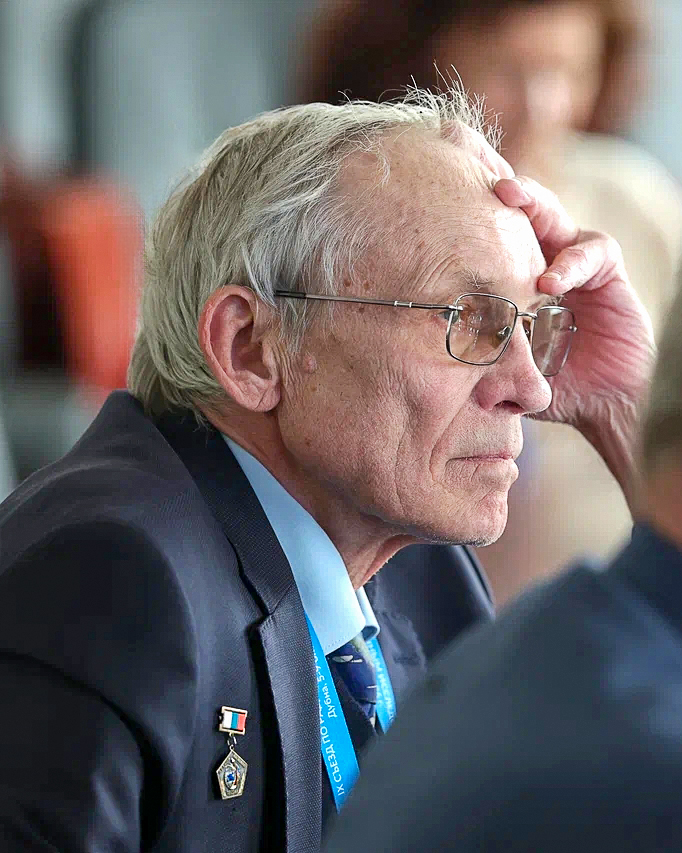
The round table was attended by pilot-cosmonaut S. V. Avdeev that shared his impressions with me literally on the run, "The Congress is forced to be held simultaneously in different places and today, two sections function, to which I have something to do: I did not hear a little speeches on astrobiology, but in the section "Radiobiology of non-ionizing radiation. Biological effects, therapeutic use and safety problems of non-ionizing electromagnetic radiation" are also interesting reports. Hopefully, there will be materials where I can get to know what I missed".
A little later, he added his comment, "In general, there are limits to where we can fly. We increasingly understand the problems that radiation creates, at the congress there were many reports on the electromagnetic effects on the body of living beings. A purely magnetic component was present in a small number of reports and how it affects the body still needs to be studied. There are more and more problems that need to be met when you approach the task of manned flight not from the point of view of big dreams, but from the practical side of implementing the idea and evaluating how safe it will be for the participants."
S. Yu. Taskaev (INP SB RAS, Novosibirsk) made a report "Boron neutron capture therapy: fundamentals, current state and current research areas. "This is the first time, I participate in a congress on radiation research. I met a large number of participants here, met some acquaintances - this is important for establishing business relations and getting some ideas about this science. This is necessary in order to make the right decisions, to build the right strategy in the boron-neutron capture therapy that I am engaged in. This is perhaps the most multifunctional and multidisciplinary technique, many aspects should be taken into account, including radiation safety, the effect of radiation on cell cultures, something is wrong to ignore here. I cannot say that we really need some joint research. We are heavily loaded, we have experiments scheduled by the end of the year.
I learnt about JINR in 2014, when I was defending my doctoral thesis and one of the opponents was from the Joint Institute. More fruitful cooperation arose after 2021 with FLNP. We once began to measure the cross sections of nuclear reactions and received useful advice from the Laboratory. And today, FLNP modernizes the EG-5 accelerator and we give advice and implement joint research. No need to withdraw into yourself, we need to look for areas for new joint research."
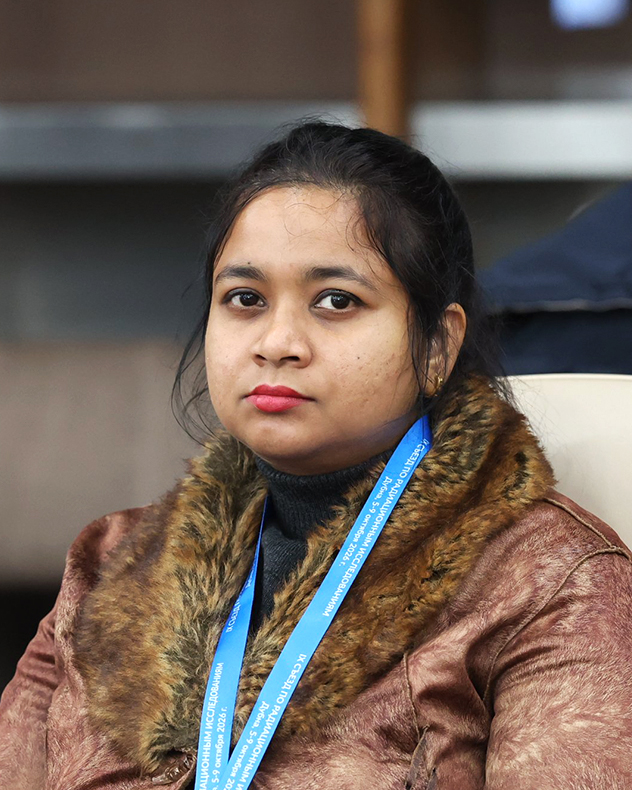
Some LRB employees shared their impressions of the Congress. Mitu Lal (India): "This is a big event that has brought together specialists from different centres. I myself work with radiation: X-ray and gamma radiation, proton beams. For me, participation in the congress is an excellent experience of communicating with people working in very different areas, including with these types of radiation that is especially important for me. I am a radiobiologist, studying tumor cells of different species. It is important for me to understand how different radiation affects them for use in radiotherapy in the future. Yesterday, I listened to a report on active oxygen species that are important components that occur after exposure to ionizing radiation and I was interested. I work in New Delhi at the H. Bab Atomic Research Centre, India's leading scientific centre."
Jan Carlos Diaz Rodriguez (Cuba): "The Congress brought together specialists from many areas, this is an extensive scientific ecosystem in Russia. Despite the language difficulties, I learned a lot. Many reports were very interesting for me. My specialty is materials science and the narrower field is nanotechnology. I would like to know more about different applied sciences with nanoparticles, especially, about boron neutron capture therapy and other interdisciplinary investigations that apply nanoparticles.
I came to JINR three years ago to participate in the START programme. The research carried out here interested me, as a specialist I was also interested in LRB. I was invited here for a year and came to Dubna two weeks ago."
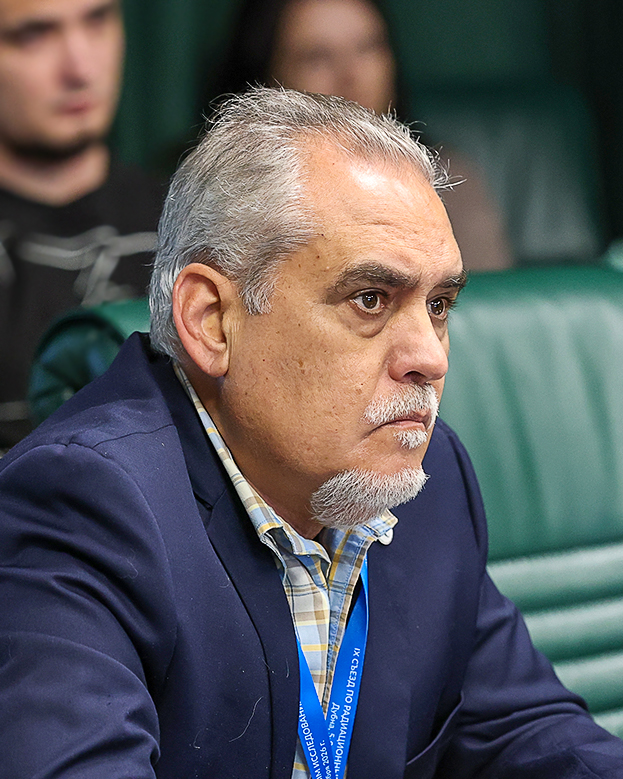
LRB Deputy Director for Research Ivan Diaz Padron (Cuba): "It was also very useful for me to participate in the Congress. Here, you feel the vastness of research areas in radiobiology in Russia, you understand that world-class specialists have gathered here. Ian and I didn't have enough time to participate in all sections, it was very interesting."
The event was also impressed by the participants from other research centres.
G. A. Posypanova (RC "Kurchatov Institute"): "I try to come here every year at conferences, there are always very interesting reports. At the Congress, I communicate with colleagues, in such communication, you always learn something new, some ideas appear, ways for joint work. And I really love the city of Dubna and the people who live and work here. My thanks to the organizers and especially to Igor Vladimirovich Koshlan - everything goes perfectly, although the meetings are held in four places, no disruptions. I have been cooperating with Elena Anatolievna Nasonova from LRB for several years, our interests have come together. The first, very encouraging results appeared. We currently prepare a publication and schedule further collaboration."
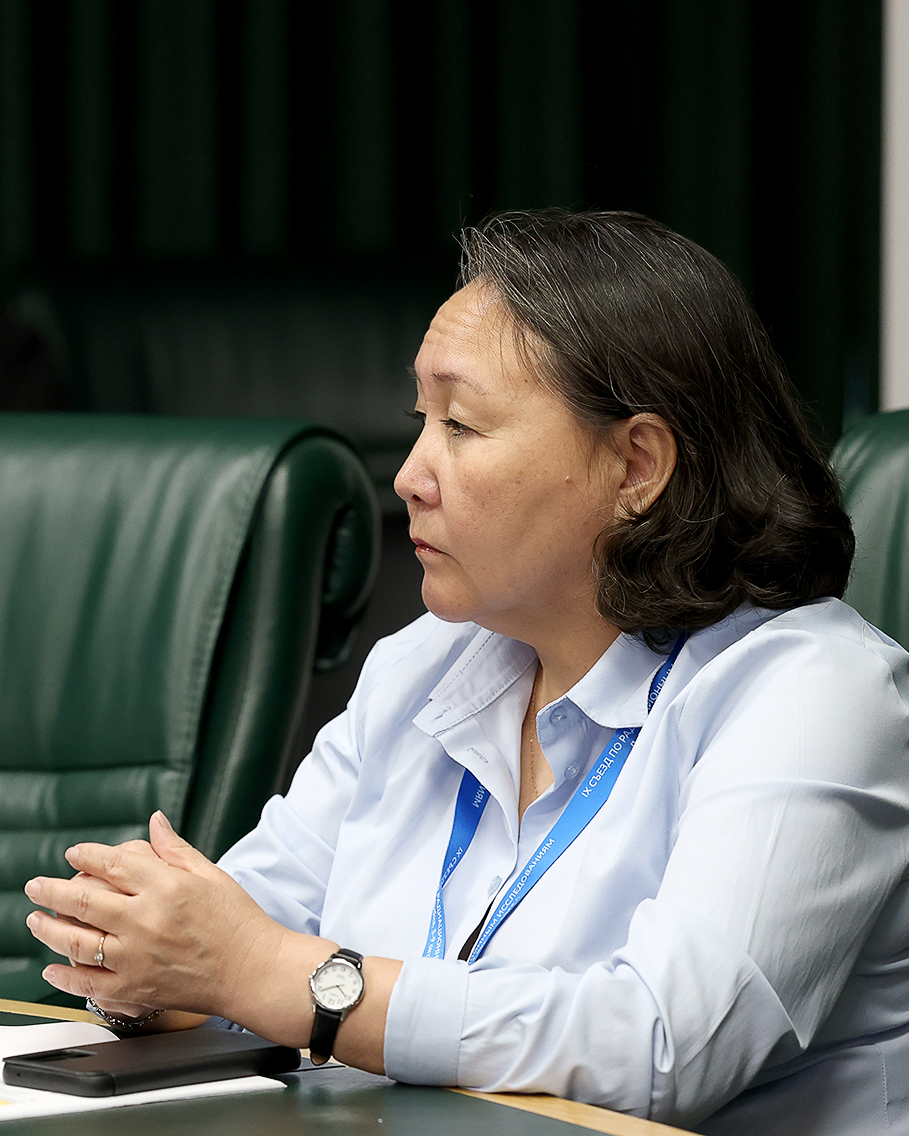
S. N. Mamaeva (Institute of Physics and Technology of the North-Eastern Federal University, Yakutsk): "This is not my first time in Dubna. Two years ago, I participated in the Nuclear Physics Conference NUCLEAR-2024. And the Congress on Radiation Biology for me and my colleague K. A. Petrova is an important event. She made a report on radiation ecology - she presented the results of investigations of the concentrations of radionuclides, radon and the radiation dose obtained by the population in Yakutia. I will give a report tomorrow. The topic of my speech is related to the effectiveness of radiation therapy. We observe the so-called visicles in the blood of patients using microscopy and immunofluorescence analysis before and during radiation therapy. There is a correlation between the concentration of these nanoscale structures in the blood and for example, the 5‑year survival of patients. We assume that these visicles can be considered as biomarkers of the effectiveness of radiation therapy and scanning electron microscopes should be introduced into the arsenal of radiotherapy departments.
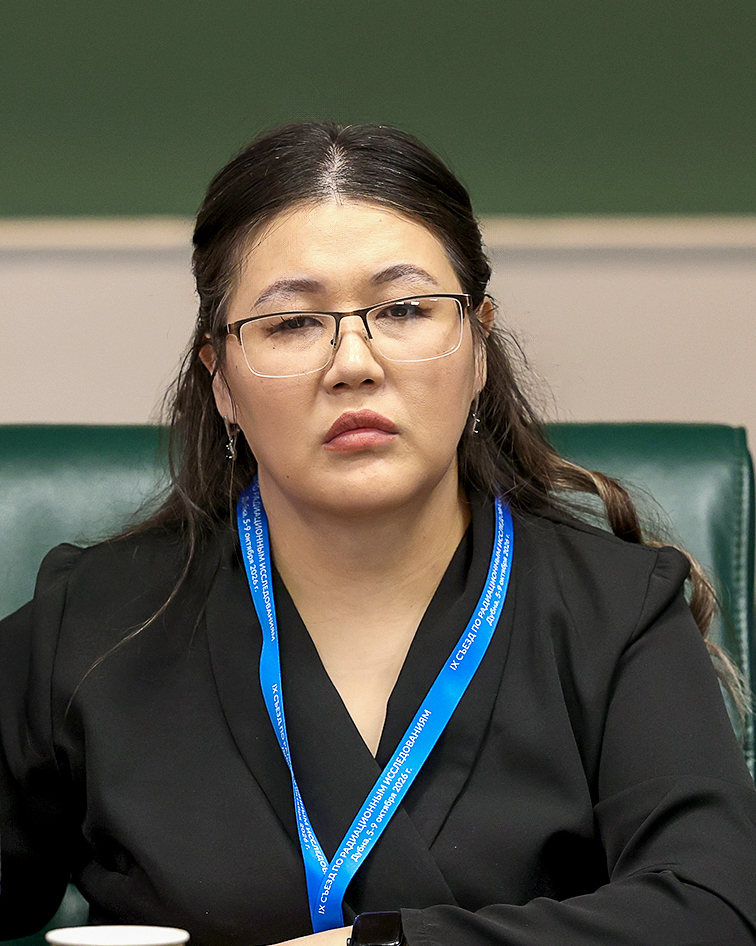
The plenary reports of the Congress were wonderful and such a variety of sections with interesting reports in the field of radiation therapy. In general, the programme is very rich. Today, we listened to the speech of Academician of the Russian Academy of Sciences Alexey Rozanov at the round table "Astrobiology" and were very impressed. This is a real gift, although we are completely unrelated to this area but it is so accessible and interestingly told that it is time to think about changing the specialty. It's great that you can communicate with the highest professionals, with some of them we hope to establish cooperation."
I. M. Lebedenko (N. N. Blokhin National Medical Research Centre of Oncology): "Last year, I accidentally came here to a radiobiological conference. I was invited by Marina Vladimirovna Frontasieva, whom we met at a conference in Yakutia. I work in the radiotherapy industry, JINR - in completely different areas, at first, I learnt about the research areas of the Joint Institute. I was most interested in astrobiology, although it has nothing to do with my work. At the Congress, I found answers to my questions. The radiobiology of spaceflight is also an extremely exciting industry. The plenary reports of the first day were unusually interesting.
A huge organizational work was carried out, an excellent programme was assembled and everything was controlled daily by Alexander Nikolaevich Bugay and Igor Vladimirovich Koshlan. Igor Vladimirovich managed to visit all sections, made sure that everything went according to plan. It is a great honor for me to attend the Congress, a huge gratitude to JINR Directorate for organizing such a major event, for the fact that we have an amazing opportunity to gain knowledge in those planes where we do not work. This is undoubtedly useful and will have a positive impact on our direct work. I managed to love Dubna, your wonderful city, especially its old part and I am happy to come here."
And although the work of the Congress ended on Friday, its musical coda was an enchanting concert of the Dubna Symphony Orchestra conducted by Sergey Pospelov on Thursday. And it began, as on the first day of the Congress, with a bright and sparkling V. A. Mozart and ended with the brilliant A. Piazzola.
To be concluded
Olga TARANTINA, photos by Igor LAPENKO