
MPD ready for the first launch

The key objectives of the upcoming beam run are the technical start-up of the detector subsystems of the facility in the basic configuration, the debugging of the centralized data storage and reading system, as well as the evaluation and analysis of the achieved equipment features.
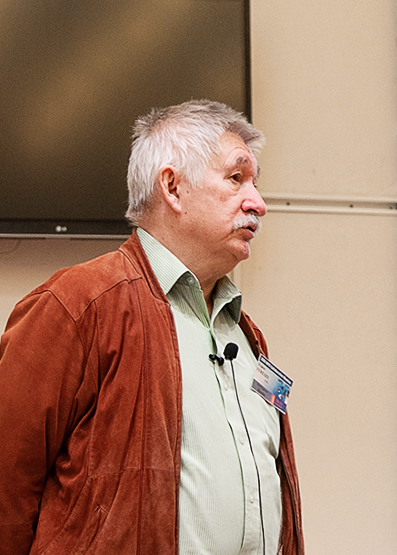
The working programme of the meeting was opened by VBLHEP Acting Director Andrey Butenko. Addressing the participants, he emphasized that the Collaboration has reached a historical milestone, "A few months separate us from the moment when we can achieve the first signals and start processing real data obtained on the MPD detector. We have been going to this event for two decades - since the moment when the NICA project was just developing in 2006."
An overview report on the progress of work at the NICA Accelerator Complex was presented by Chief Engineer Evgeny Syresin. In his speech, he summed up the results of the first beam run that ended at the beginning of the year and outlined the basic tasks of the current run that started on 3 September. The key results of the previous stage include the injection of xenon ion beams into the collider rings, ensuring their stable circulation, synchronization for convergence at the MPD interaction point, as well as the observation of the first beam collisions under conditions of limited intensity and energy during commissioning.
Within the framework of the current run, the VBLHEP specialists are focused on the sequential reduction of beam losses at all the accelerators and injectors of the Complex. At the stage of injection into the booster, thanks to the use of an electronic cooling system, it was already possible to achieve an intensity of about 6·107 ions with minimal losses. Comprehensive modernization of the beam transportation channel from Nuclotron to the collider allowed increasing the efficiency of beam extraction from Nuclotron and its wiring. Focus in the report was on the inclusion of new equipment in the commissioning cycle directly in the collider rings. During summer, the engineers mounted:
- two RF-3 accelerating cavities;
- components of the longitudinal stochastic cooling system (at this stage, the system operates in the frequency range equal to 20% of the full spectrum width);
- 6-meter precision solenoid of high-voltage electronic cooling system;
- beam profile collimation and measurement systems.
After moving the multipurpose detector to its operating position at the end of October, the specialists will begin the first physical tests in the mode of interaction of a low-intensity beam with a gold wire. This stage will allow testing both the MPD detector and the NICA Collider System before proceeding to the colliding beam run that is scheduled for early 2027.

Head of the MPD collaboration, a chief researcher at VBLHEP JINR Victor Ryabov spoke about the degree of readiness of the experimental facility for the first beam runs. In his report, he emphasized the completion of the summer campaign to map the magnetic field at a nominal value of 0.5 T. The results of these measurements will ensure optimal operation of the central tracker for precise particle registration.
At the same time, progress has been made in assembling the internal subsystems of the facility. Over the past six months, 50 half-sectors of the electromagnetic calorimeter (ECAL) have been completely mounted in the power carbon fiber frame and the installation of 28 Time‑of‑Flight (TOF) system modules has been completed. A central tracker magnet has been mounted in the aperture - a Time-Projection Chamber (TPC) that has previously passed a complete cycle of commissioning tests. At the final stage, a carbon fiber cartridge was integrated inside the detector, containing a beam tube, fast FFD Cherenkov counters and related supporting structures. Currently, the installation of cables, as well as of water- and air-cooling systems for detectors is proceeding to completion.
Speaking about plans for the upcoming run, Victor Ryabov emphasized that the MPD collaboration is moving from the stage of computer simulation to working with real data. Since at the initial stage, the collider luminosity will increase in stages, the basic operation mode of the multipurpose detector will include interactions with the wire. The primary tasks of the staff are the technical commissioning of the facility, calibration of all detector systems and registration of the first real events.

The practical aspects of integrating the components of the MPD detector in the basic configuration were highlighted in the report by the technical coordinator of the collaboration, Head of the MPD Department Vyacheslav Golovatyuk. Having reported to the meeting participants on the preparation of subsystems, he outlined the plans for the upcoming installation work. The facility took its operating position on 26 October.
The programme of the first day of the meeting was continued by a series of specialized reports. Evgeny Antokhin (INP SB RAS) and Vyacheslav Klyukhin (SINP MSU) made reports on the results of field measurements and 3D magnetic field mapping of the MPD solenoid. Head of Sector of Ion Collision Reconstruction of JINR Oleg Rogachevsky spoke about the current status and development of the experiment's computing infrastructure required for data processing.
In total, over 20 reports in science and technology on the multi-purpose detector were presented at the 18th meeting of the MPD collaboration. On the second day, the participants that had arrived in Dubna visited the NICA Accelerator Complex to personally evaluate the extent of the work carried out in the MPD experimental pavilion and at the Collider. The results of the meeting and priority plans for the collaboration were announced on 22 October during an open discussion.
JINR Press Office